

Nolan’s – not Homer’s – Odyssey
Paul Cartledge·September 1, 2026
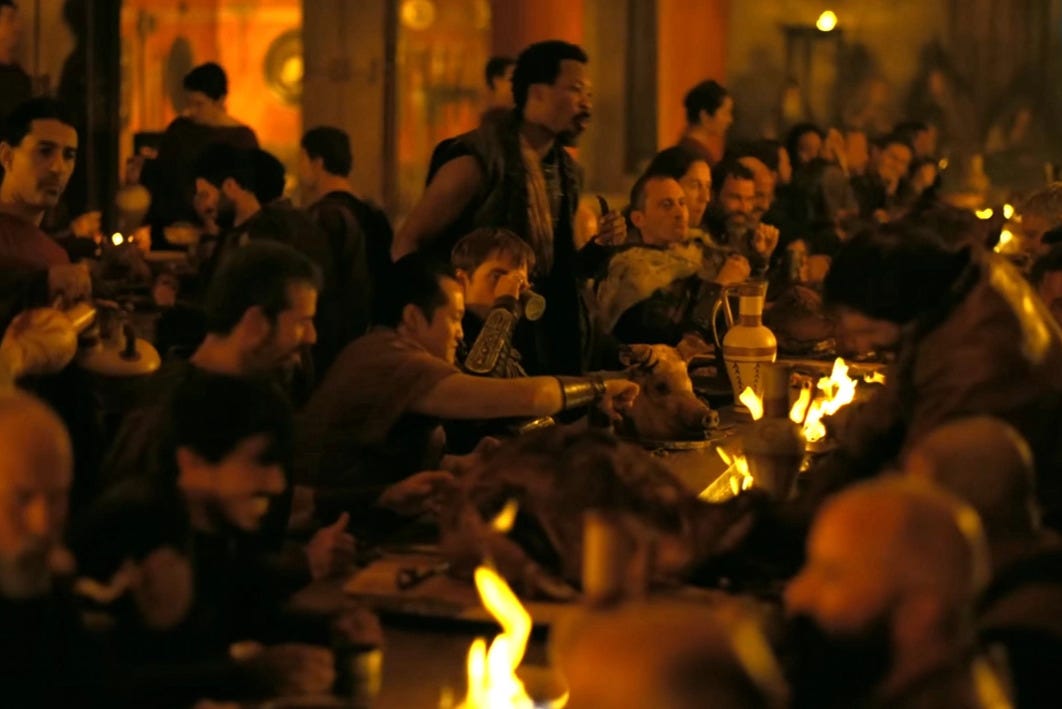
The (large) size of the Paideia Odyssey movie Roundtable audience and the (long) series of comments/suggestions/queries in the Chat tell their own tale: Christopher Nolan’s Odyssey movie is hot box office. But does it deserve to be? Is it being hot in the best possible way(s)? Those were two of the questions I had in my mind before we met last month. I’d done my homework – admittedly not having read quite every single item on Rogue Classicism’s listing of reviews but certainly having read a great deal both before and after watching the movie, which I did in Cambridge in an ordinary (not IMAX) cinema with my daughter and two grandchildren aged 12 and 14.
Strictly those last two were underage, because The Odyssey is rated in the UK a ‘15’, meaning for 15-year-olds and over only. Why? Because of the film’s ‘strong violence’. Well, yes – but of course simulated violence, and our two grandchildren seemed to take that entirely in their stride. At any rate, it didn’t spoil their overall enjoyment – they seemed genuinely pleased to have watched it. What they didn’t know – and I didn’t tell them – was that in parts the original is actually far more violent, both in intensity of violence and in the nature of the violence inflicted upon what sort of people. That’s a point I’m going to return to at the end.
First, to recapitulate briefly my 7-minute contribution: I’m probably the worst possible critic of the film, because not only am I not a movie-buff cinéaste nor a Nolanista (a connoisseur of the extensive Nolan filmic oeuvre), but I’m also a dyed-in-the-wool classicist who’s been reading versions of the original 12,000-line poem since the age of 8 (I’m now 79) – as I mentioned in a recent contribution to In Medias Res talking about my first encounter with a ‘told to the children’ version in 1955. The first point I made at the Roundtable – and emphasize again now – is that what we are or should be trying to evaluate is very much Nolan’s Odyssey, not Homer’s.
The original is the outcome of centuries of oral poetic improvisation and transmission. Nolan’s nearly three-hour effort is the result of a few years’ collaborative thinking and performance and recording made possible by immense amounts of money, disparate individual skills and massive technical backup. Listening to – only – words is a totally different experience from watching moving images. Homer’s Odyssey in pretty much the written form transmitted thereafter was probably composed or compiled somewhere between 750 and 650 BCE, probably nearer the latter than the former. We live in 2026. The original did, I’ve argued, have an overall message – beyond the sheer entertainment value of the individual episodes and the magic realism occasioned by divine manifestations and interventions.
That message was I believe a series of lessons in hellenicity, in how to be good Greeks. Yes, observance of hospitality protocols (xenia relations) was part of it – but by no means the whole. There was much more to being a good Greek than being a good host – or guest. For instance, monogamy rules ok: the paean to married harmony and same-mindedness that Odysseus delivers to Princess Nausikaa of Phaeacia in Book 6 was still a key part of Herodotus’ definition of to hellēnikon (8.144) two centuries later. All the more powerful a lesson for being delivered by recovering serial adulterer, Odysseus.
But I hear you ask where are Nausikaa or Phaeacia in Nolan’s Odyssey? Precisely nowhere, as so many of us classicists have lamented. But so what? To repeat, it’s Nolan’s not Homer’s Odyssey we’re criticizing. To me it’s a curate’s egg of a film, very good in some parts, not so good in others. The cinematography, the scene-settings, even some of the music (some played on repro ancient instruments) – all good. Some of the characterizations – Argos the dog, Anne Hathaway’s Penelope, and John Leguizamo’s enslaved swineherd Eumaeus, for instance – were good, even very good. Some – not least Matt Damon’s Odysseus (for the reasons Joy Connolly gives) – were not good at all, though my raspberry (reverse Oscar) would go to Jon Bernthal’s Menelaus, played as a retired Mixed Martial Arts fighter. What on earth had Lupita Nyong’o’s Helen ever seen in him? (Her Clytemnestra might have been better suited – but no marital ‘unanimity’ there.) As to the film’s overall message, I agree with Mark Buchan’s astute and acute reading – but didn’t like or admire the film the more for that. It at least encouraged, maybe enforced the sort of Odysseus that Damon portrayed. It led, almost inevitably to a blurred endgame, after Odysseus has – bypassing Phaeacia - finally returned to Ithaca and been reunited with Penelope and son Telemachus (but not ‘dad’ Laertes) as well as with Argos and Eumaeus.
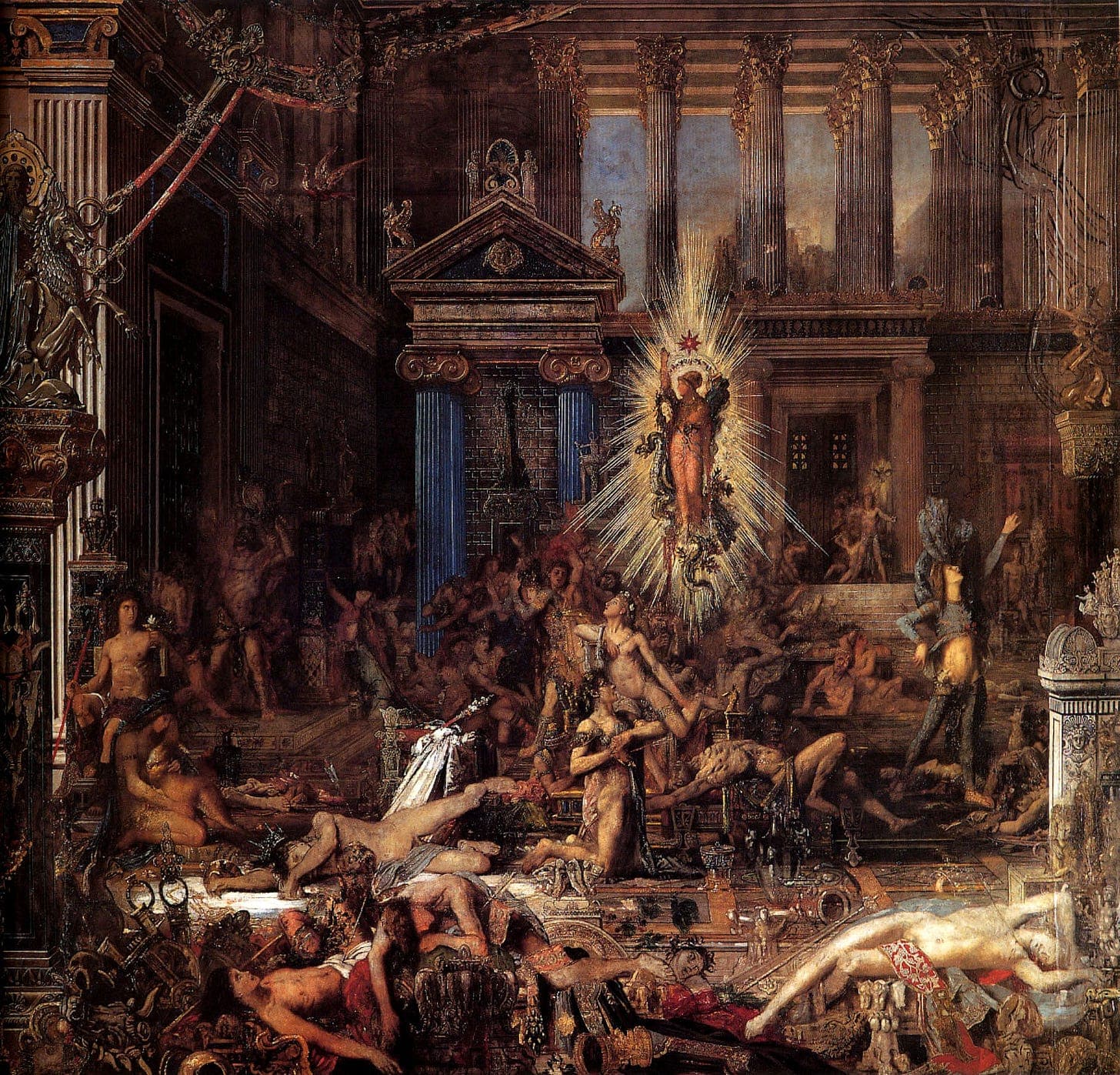
It’s to the endgame that I return finally. In the Chat I was asked directly what I thought of Nolan’s handling of Odysseus’ revenge on the ‘wooers’/suitors who’d been besieging his palace and household for the past three years. I chose not to reply then, since it’s mighty complicated. I mentioned above that the film’s rated ‘15’ for its ‘strong violence’. Well, it may come as a bit of a shock to that enquirer to be told that actually Nolan toned down the violence related in the original. Of course slaughter is slaughter, and Nolan’s version of the sack of Troy that so traumatized Odysseus is not for sissies. But there’s one particular incident in the original Odyssey that’s quite exceptionally cruel and violent, not alone because of its physical horror but because of the identity of the – enslaved – victims. And they are not – male – suitors.
In both the Iliad and the Odyssey there’s a repeated line to the effect (I paraphrase) that the very act of enslavement deprives the enslaved person of half his or her quality or ‘virtue’ (aretē). This is a glimmer of humanity on the part of the poet addressing a world in which the enslavement typically of outsiders, including non-Greeks, was becoming an accepted, more or less unquestioned socioeconomic norm. Eumaeus was just such an enslaved Greek outsider. We don’t know the natal origins of the 12 of Odysseus’ maidservants whom on his father’s orders Telemachus had most cruelly strung up – for the crime of having had sex with suitors. We do know they were enslaved female persons, who probably therefore had had little or no choice in the matter. Nolan’s often criticized for his less than feminist handling of female characters. All credit to him, therefore, for excising that particular plot detail and sparing viewers an extremity of masculinist, possessive violence.
Paul Cartledge is Emeritus A. G. Leventis Professor of Greek Culture at the University of Cambridge.
Originally published in In Medias Res on Substack. Read it there or subscribe to get new articles by email.