

Winning the Homecoming, Losing the War: On Nolan’s Odyssey
Mark Buchan·September 11, 2026
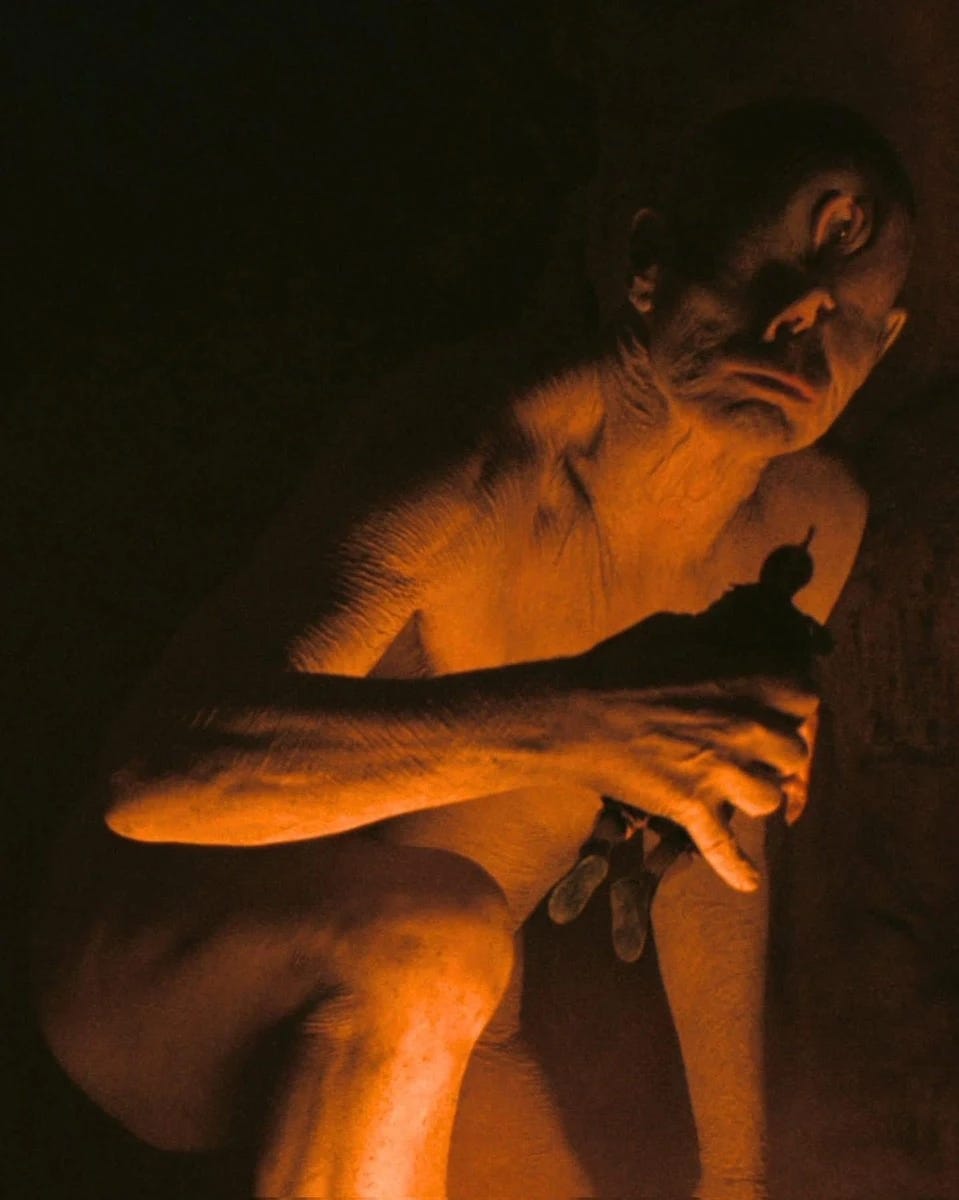
The funniest moment in Christopher Nolan’s The Odyssey is central to his entire artistic endeavor. Odysseus and his men have entered the cave of the Cyclops, helped themselves to his cheese, and thus already flaunted ‘Zeus’s law’. Some men get eaten, the Cyclops gets blinded, and only then does the giant start to speak. ‘He can speak!’ one of the men barks in surprise. ‘Perhaps we should reason with him?’ ‘It’s a little too late for that’, Odysseus drily responds.
And therein lies the audacity of Nolan’s vision. He has given us a world where there is, of course, reason, as well as reason’s evil twin, trickery. But they are more or less irrelevant. Greek civilization has collapsed in on itself, and imminent destruction is unavoidable. So what would reason, or trickery, be for? In Homer, the blinding of the Cyclops causes the delays that are the poem, setting up the elemental wrath of the sea-god Poseidon toward the homecoming of the hero. In the film, the Cyclops episode previews the broader ending the film tells of, but chooses not to depict: the demise of the Greek world, soon to be destroyed by the ‘Peoples of the Sea’. In a twist, these turn out not to be external invaders, but the seafaring Greeks themselves. Nolan has borrowed from Croesus’ misreading of the Delphic Oracle in Herodotus; Croesus is told that if he invades Persia, he will destroy a great Empire, but is unable to imagine the Empire might be his own. Nolan’s Greeks are blind to the powers of self-destruction inherent in their own seafaring culture. Far from a civilization built on reason, the Cyclops episode suggests their own culture self-servingly links exploration to violence, with reason turned to only as an afterthought. Odysseus already half-knows this after the fall of Troy, and stops playing the rationalist game. It’s a little too late for that.
This vision explains the change in the idea of trickery. Classicist critics from all over have lamented the lack of cunning in Nolan’s Odysseus. And what intellectual isn’t happy not only with cleverness, but recognizing cleverness? It lets us pat ourselves on the back for being clever enough to spot it. In my own writing on Homer, including on IMR’s pages, I am certainly guilty. But Homer’s Odyssey is not the celebration of cunning that many suppose. Instead, it shows a hero who is so fascinated by the clever means of achieving an end that he loses track of the end itself. His journey home offers him a series of problems (how to escape Scylla and Charybdis, the Sirens etc.) which are sometimes solved, sometimes botched; but his shortsighted delight in these games matters more. Odysseus cares more about tricking the Cyclops than what his trick might do to the Cyclops, let alone what it means for his supposed desire to return home, just as later he will be unable to stop himself from deceiving and nearly killing his father in the poem’s final book. Nolan has not ignored this cunning. He has simply taken it a step further. Nolan’s Odysseus looks back on his trickery and asks himself what the point of it all was. The answer comes in the film’s most powerful scene, as our hero, until now benumbed by the lotus fruit supplied by Calypso from past trauma, finally remembers the Fall of Troy. It’s not just the lack of heroism in the slaughter that Nolan focuses on. Instead, we follow the hero in utter confusion, as he haphazardly stumbles through Troy as it burns.

Nolan thus makes explicit what is already implied in The Odyssey. To offer one more example, take the passage through Scylla and Charybdis. As in Homer, Odysseus doesn’t tell his comrades the truth foretold by Circe, that they would necessarily lose men. But unlike Homer, this episode ends as Eurylochus notices Odysseus’ lack of surprise at the men’s deaths, and works out that Odysseus knew, but didn’t tell them. This is one of Nolan’s many twists on the motif of recognition, and here it points to the social breakdown and lack of trust between Odysseus and his men. Already hinted at in Homer, it becomes the focus for Nolan. One could replay the Cyclops dialogue here. Why didn’t you try to reason with us, Eurylochus could ask, or tell us about what Circe said, be open with us? But it’s a little late for that. What’s laid bare is the dangers of trust in any charismatic leader.
I don’t think Nolan’s film is particularly subtle. Perhaps that’s what makes it powerful. But it makes efforts to turn the film into some kind of hopeful paean for Western Civilization particularly hard, for me at least, to take. Ezra Klein, in an opinion that can’t decide whether it does more clumsy injustice to Ancient Greek civilization or the Judaeo-Christian tradition, suggests Nolan’s genius is in turning a barbaric, violence-loving Odysseus (exemplar of the Greek tradition) into a guilt-ridden but fundamentally moral Judaeo-Christian, who somehow has learned ‘the golden rule’ of treating others like yourself, and is now hopelessly out of place in a Homeric world where empathy was supposedly not quite on the moral radar. This brutally unfair and ignorant attack on the imagined world of Homer, let alone ancient Greece, can’t survive even a cursory reading of the first 50 lines of either The Iliad or The Odyssey. But in its way, he is doing what the classicists who decry the absence of Odysseus’ cunning are doing: finding his comfort zone. How suspiciously convenient that one can find a celebration of one’s own group’s ethics in a profoundly troubling film about imminent civilizational collapse. How suspiciously convenient that classicists can opine, endlessly, about what the film leaves out, and not about what it shows. Nolan’s film demands we do something very different. What if our own world also is both morally and materially collapsing? Nolan’s Odysseus answers the collapse by embarking on a final journey of personal penance for those he has betrayed. For us, we could at least take the time to register the ongoing collapse and consider what this tells us about the belief systems that have led us here.
Mark Buchan is the Editor of In Medias Res.
Originally published in In Medias Res on Substack. Read it there or subscribe to get new articles by email.