
LLiNYC 2027 Call for Papers
Submit an abstract for the Paideia Institute's 2027 Living Latin in NYC Conference!
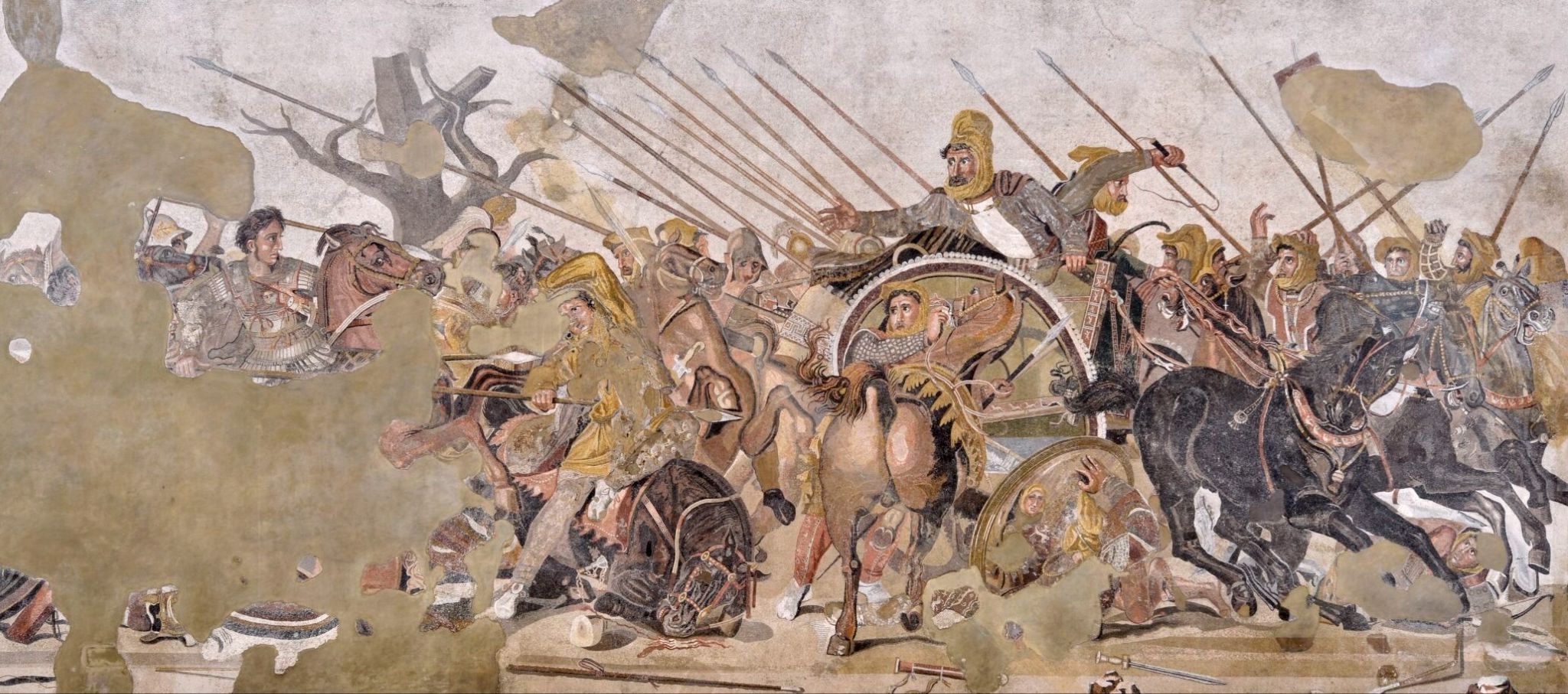
Alexander Mosaic from the House of the Faun in Pompeii, 2nd century BCE
The Paideia Institute is pleased to announce that the fourteenth iteration of the Living Latin and Ancient Greek in New York City conference will take place on February 13th and 14th, 2027 in Manhattan. The conference program will include papers delivered in Latin, Ancient Greek, and English, breakout sessions for guided reading and conversation practice, and opportunities for informal exchange and networking.
The theme of this year’s conference is Pax et Bellum. How do Greek and Latin texts throughout history conceptualize war and peace, and how were these states celebrated, mourned, justified, or condemned? What counts as a just cause for war, and who is expected to fight? What are the moral and political dimensions of conflict and its resolution, and how do they shape identity, virtue, or power?
We invite proposals for short talks (in Latin, Ancient Greek, or English) that consider how this binary is constructed, contested, and represented across ancient literature, philosophy, history, and material culture. Outstanding submissions in English on other topics will also be considered, particularly (but not only) if they focus on classical language pedagogy.
Please use the link below to send in an abstract of no more than 500 words. The deadline for submissions is October 1, 2026. Travel bursaries are available and can be requested by completing a separate scholarship application. We encourage accepted speakers to apply for external funding as well since the number of travel bursaries is limited.
DE PACE ET BELLO
Magnopere iuvat Institutum nomine Paideiam pronuntiare, decimum quartum Latinitatis ac Graecitatis Vivae Novi Eboraci conventum inde ab a.d. XVII Kal. Mart. ad a.d. XVI Kal. Mart. usque anno 2027 in insula Manhattensi celebratum iri: quo in conventu non modo acroases sermone Latino Graecoque et Anglico proferentur, verum etiam aliae habebuntur sessiunculae, in quibus participes, magistris doctis eruditisque freti, exercitationibus legendi atque colloquendi operam dabunt; nec plures vel confabulandi animi causa vel congrediendi negotii gratia deerunt occasiones.
Huiusce conventus propositum ad notiones pacis bellique perscrutandas attinet. Quem ad modum ei, qui scripta vel Graece vel Latine ab antiquitus ad nostra tempora reliquerunt, pacem bellumque intellegebant et describebant? Quomodo utrumque nunc laudibus ferebatur, nunc deplorabatur, nunc iustum piumque habebatur, nunc damnabatur? Quae causae bellum iustum piumque faciunt, et quibusnam arma sunt capienda? Quid ad mores, quid ad rem publicam valent pax bellumque? Quomodo pax bellumque et virtutem et potestatem et ipsam hominum naturam fingunt atque formant?
Si cui acroasiunculam (sermone Latino vel Graeco vel Anglico conscriptam) ad hoc thema pertinentem, id est, quomodo haec ratio bifaria in litteris antiquis et in rebus philosophicis, historicis, archaeologicisque fabricetur, disputetur, repraesentetur, habere libet, praecipimus, ut summarium nobis tradat. Ratio etiam eorum habebitur, qui Anglice de aliis rebus disserere volunt, praesertim (sed non tantummodo) si propositum est rationem utriusque linguae docendae tractare.
Rogamus ut nexu, quem infra reperies, adhibito summarium vocabulorum non plus quam quingentorum tradas: quod ante diem praestitutam, quae Kal. Oct. anno 2026 est, elapsam tradendum erit. Stipendia itineraria praesto erunt, quae cuivis per hanc petitionem congiarii scholaribus alendis destinati petere licebit. Suademus autem eis, qui ad conventum invitabuntur, ut stipendia etiam ab aliis locis petant, propterea quod stipendia itineraria omnibus non suppetent.
ΠΟΛΕΜΟΣ ΤΕ ΚΑΙ ΕΙΡΗΝΗ
Ἡ ἑταιρεία τῆς Παιδείας ἥδιστ' ἀγγέλλει ὅτι μηνὸς Φεβρουαρίου τῷ ἔτει 2027 γενήσεται ἡ τετάρτη καὶ δεκάτη σύνοδος ἡ καλουμένη Ῥωμαϊκή τε καὶ Ἑλληνικὴ ζῶσαι ἐν Νέῳ Ἐβοράκῳ. εἰς δὲ τὴν σύνοδον ῥήτορας προσκαλοῦμεν καὶ δὴ καὶ κεφάλαια ἀποδεχόμεθα ἀφ' ὧντινων βούλοιντο ἂν τῆς συνόδου μετέχειν. οἱ δὲ τῆς συνόδου μεθέξοντες οἷοι τ' ἔσονται καὶ ἄλλων ἀκροᾶσθαι ῥητόρων ῥωμαϊστί τε ἑλληνιστί τε καὶ βρεττανιστὶ λεγόντων καὶ μετὰ διδασκάλων διατρίβειν περί τόν τε ῥωμαϊσμὸν καὶ τὸν ἑλληνισμόν. ἡ δὲ σύνοδος γενήσεται ἐν Νέῳ Ἐβοράκῳ τῇ τε τρίτῃ καὶ δεκάτῃ καὶ τῇ τετάρτῃ καὶ δεκάτῃ ἡμέρᾳ τοῦ Φεβρουαρίου μηνός.
Τὴν μὲν οὖν κυρίαν ὑπόθεσιν ὑποτίθεμεν τήνδε· πόλεμόν τε καὶ εἰρήνην, ἤτοι ὅπως οἱ πάλαι Ἕλληνες καὶ Ῥωμαῖοι διὰ παντὸς τοῦ χρόνου τόν τε πόλεμον καὶ τὴν εἰρήνην ὑπελάμβανον, ἔτι δ' ὅπως ἑκάτερον ἐπῄνουν ἢ ἔψεγον, καὶ ὁπότερον περὶ πλείονος ἐποιοῦντο. τίς δὲ αἰτία, τίς δὲ πρόφασις τοῦ πολέμου, καὶ τίνας δεῖ στρατεύεσθαι; πῶς δὲ ταῦτα τό τε ἦθος καὶ τὴν ἀρετὴν καὶ τὴν δύναμιν ποιά τινα ποιεῖ;
Λόγους οὖν βραχεῖς περὶ τῆς κυρίας ὑποθέσεως ἀποδεχόμεθα ῥωμαϊστὶ, ἑλληνιστί ἢ βρεττανιστὶ γεγραμμένους καὶ παραδείγματα ποιουμένους τοῦ τε πολέμου καὶ τῆς εἰρήνης, ὅπως περὶ αὐτῶν ἐνενόουν οἱ πάλαι οὐ μόνον ἐν τῷ βίῳ, ἀλλὰ καὶ ἐν τοῖς λόγοις, τῇ τε φιλοσοφίᾳ καὶ τῇ ῥητορείᾳ. ἀποδεχοίμεθα δ' ἂν καὶ κρατίστους λόγους περὶ ἄλλων ὑποθέσεων γεγραμμένους, οὐχ ἥκιστα περὶ τῆς διδασκαλίας τῶν παλαιῶν γλωττῶν.
Τοὺς δὲ βουλομένους μετασχεῖν τῆσδε τῆς συνόδου ἀξιοῦμεν πρὸς ἡμᾶς πέμψαι κεφάλαιον τοῦ λόγου (μὴ ὑπερβάλλον πεντακόσια ῥήματα) διὰ τοῦ κάτω δεσμοῦ τῆτες πρὸ τῆς πρώτης ἡμέρας τοῦ Ὀκτωβρίου μηνὸς. Οἵτινες ἂν βούλωνται, δύνανται αἰτῆσαι πορευτικὰς χορηγίας διὰ τοῦ δεσμοῦ χορηγιῶν. Ὀλίγαι δὲ μόνον ὑπάρχουσιν, διὸ παραινοῦμεν τοῖς ἀποδεχθεῖσιν ῥήτορσιν καὶ ἄλλας ζητῆσαι χορηγίας.