Living Latin in Rome
June 27, 2027 – July 10, 2027
The Fall of the Roman Republic
Course Description
Living Latin in Rome is an intensive Latin experience set in the city of Rome. In two seminar-style meetings every day, participants read and discuss Latin literature and Roman history and culture. To the extent possible, the language of instruction in these seminars is Latin.
In addition to the daily seminar sessions, the program includes a variety of optional programming designed to build students’ facility in speaking and understanding Latin, as well as lectures on topics relating to Roman history and culture, and visits to historical sites in Rome. The program also features a trip to an important site outside of Rome that is relevant to the program’s theme.
In 2027, Living Latin in Rome will focus on The Fall of the Roman Republic, featuring texts from Julius Caesar, Cicero, and Catullus, as well as other Late Republican authors. The program offers an overnight weekend visit to Ravenna and Rimini, where students will retrace Caesar's steps when they cross the famous Rubicon river.
Prerequisites
Participants should know the basics of Latin grammar. This usually means the equivalent of one year of college or two years of high-school Latin. Completing Paideia’s self-paced online Living Latin course also satisfies the prerequisite to apply to this program. No experience speaking Latin is required, but experienced Latin speakers are also encouraged to apply. Paideia alumni and Nexus members are particularly encouraged to apply.
Participants must be 18 years or older. Students under the age of 18 and students who have not yet graduated from high school should consider Living Latin in Rome High School.
Classrooms
Classes for Living Latin in Rome take place in modern, air-conditioned classrooms at Cornell University’s Rome campus.
Teachers
Photos
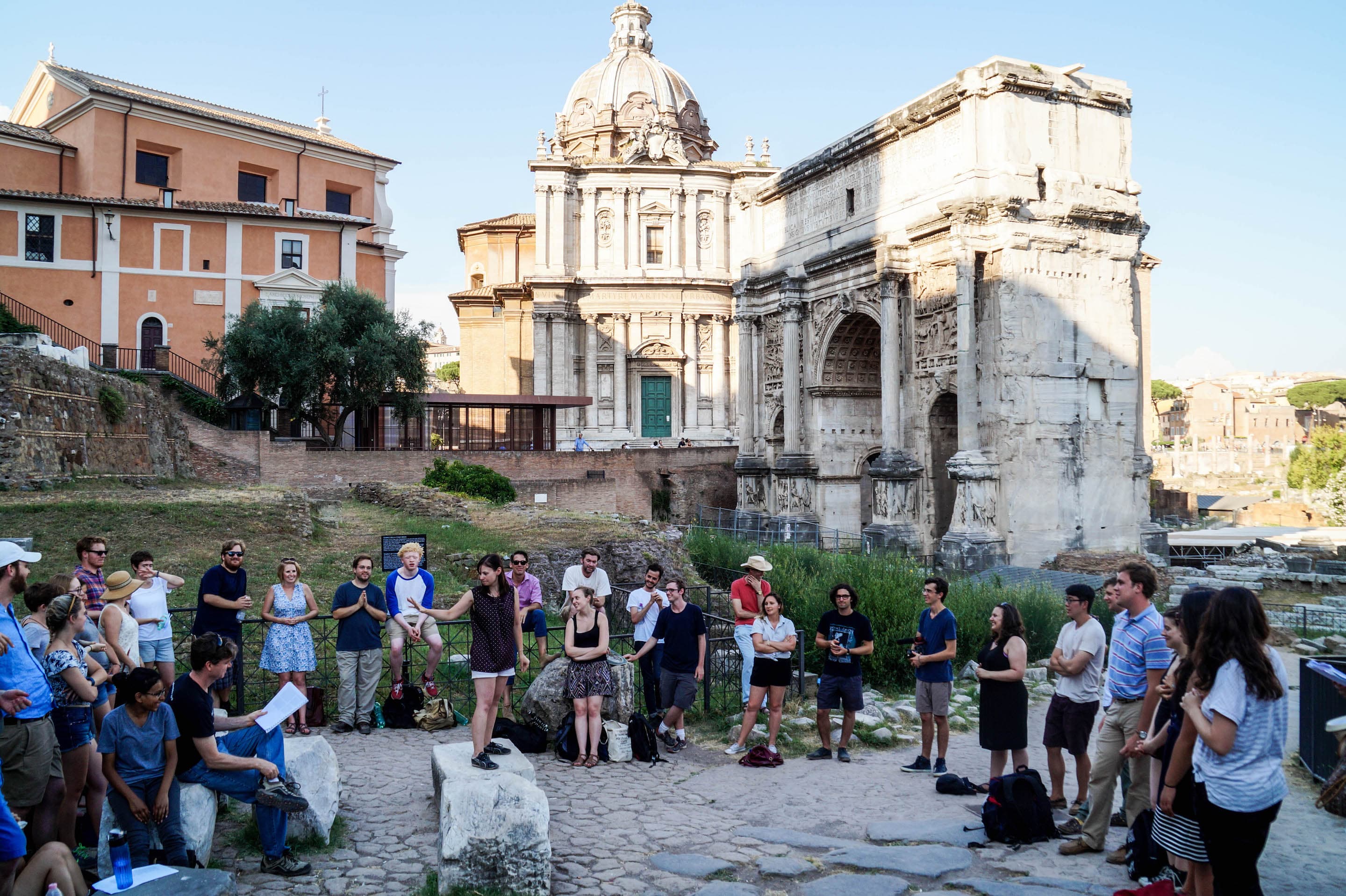
Performing a Ciceronian speech at the Forum
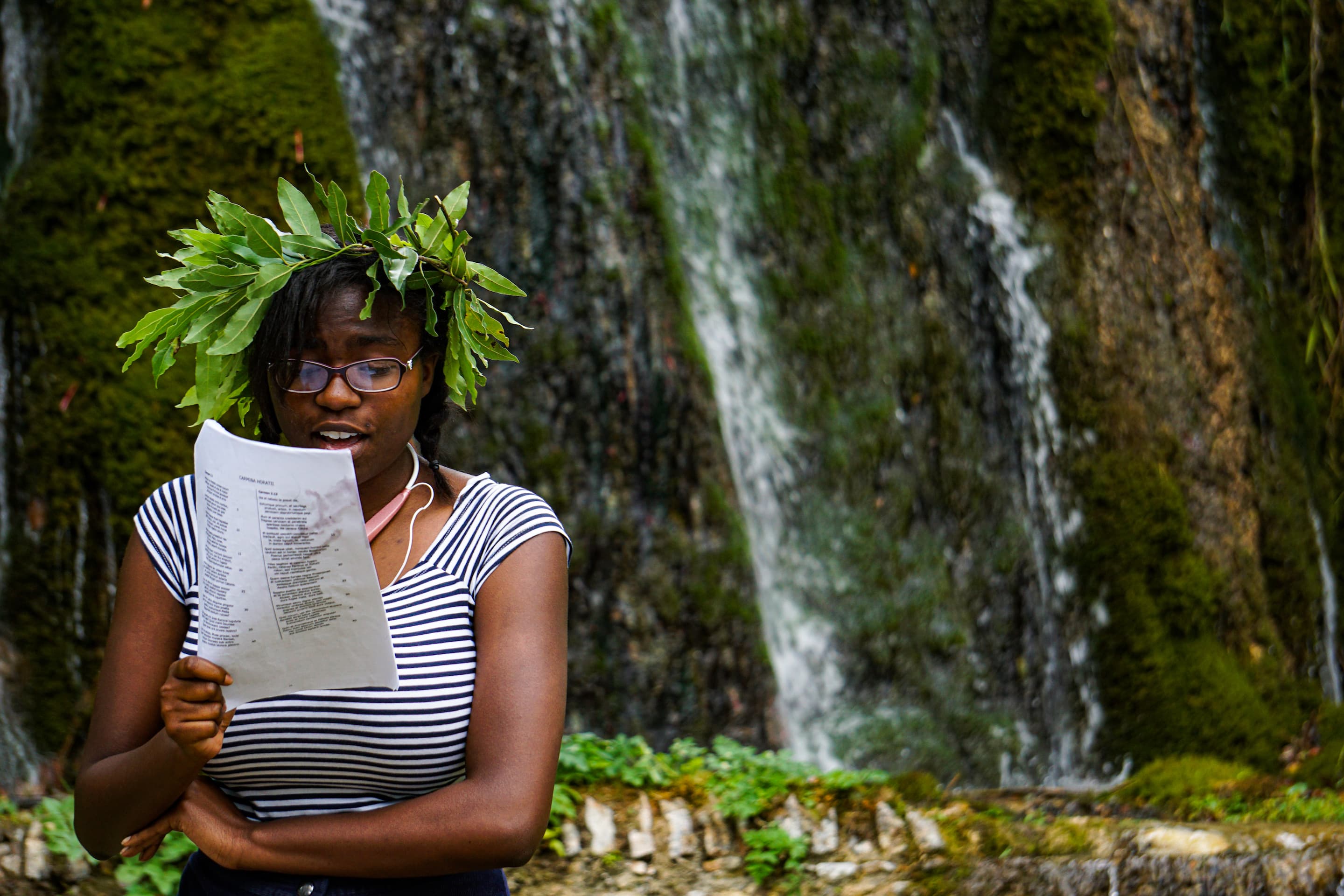
Bringing poetry to life at Horace's villa
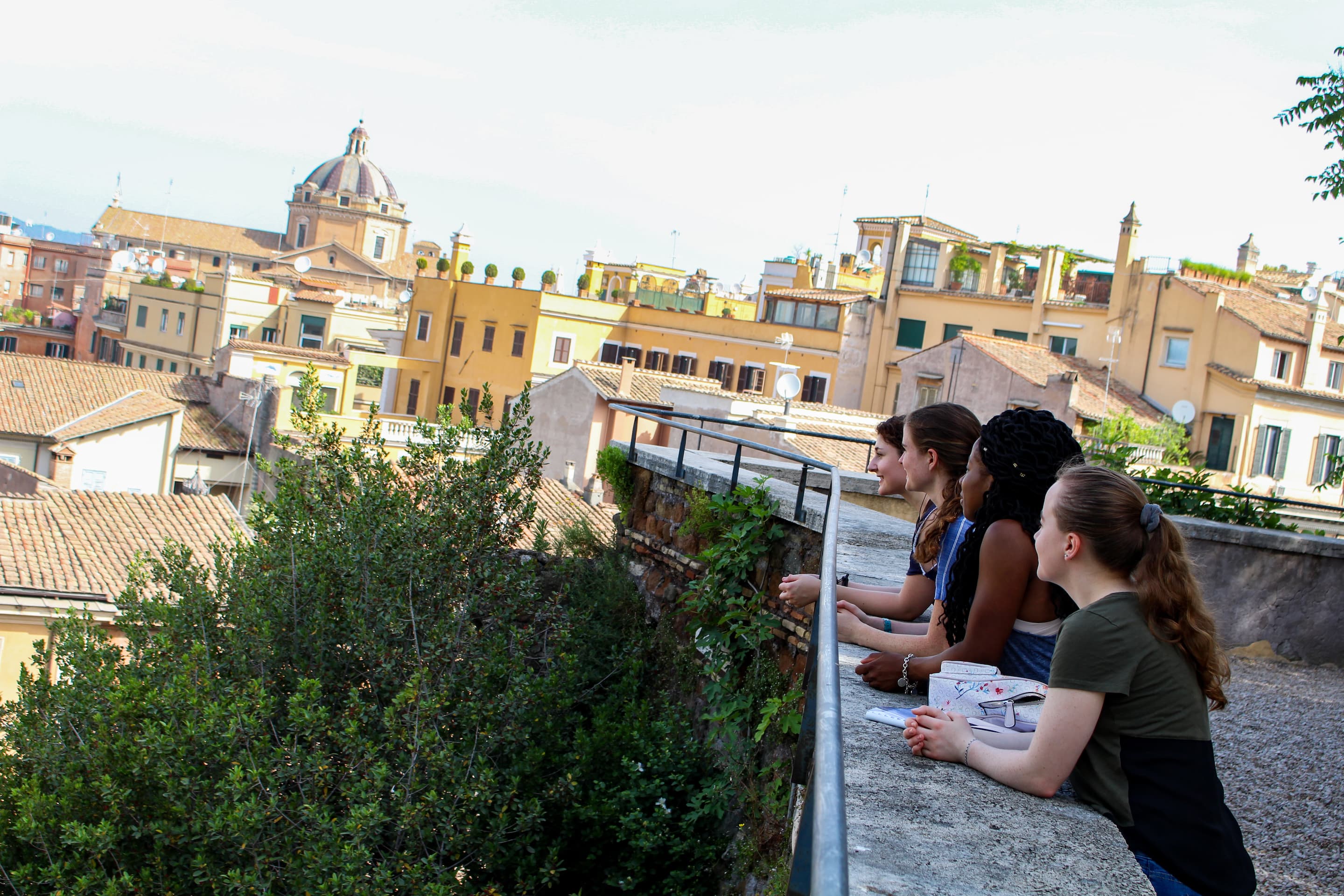
A view from the Capitoline Museum
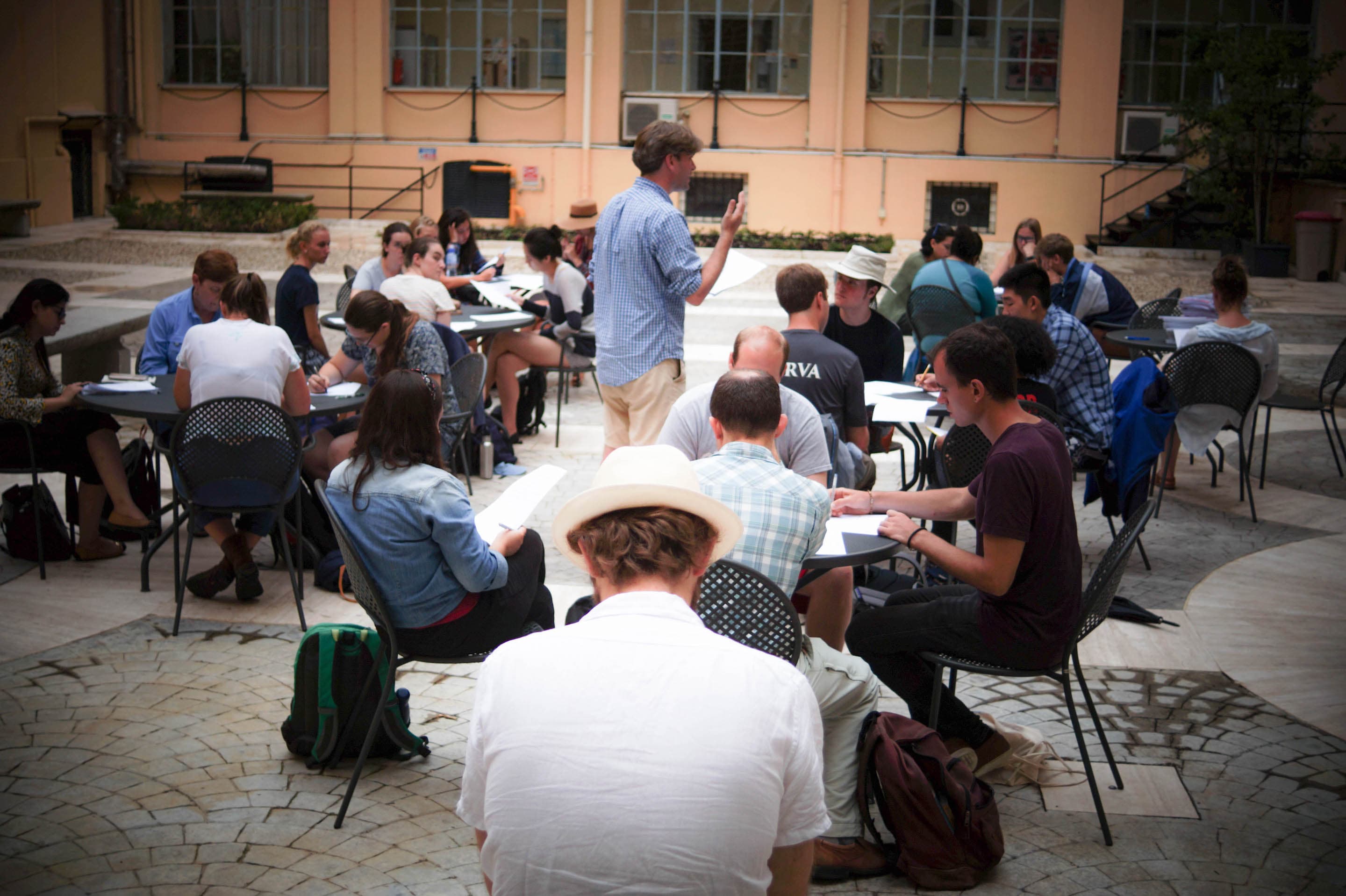
Reading Latin en plein air
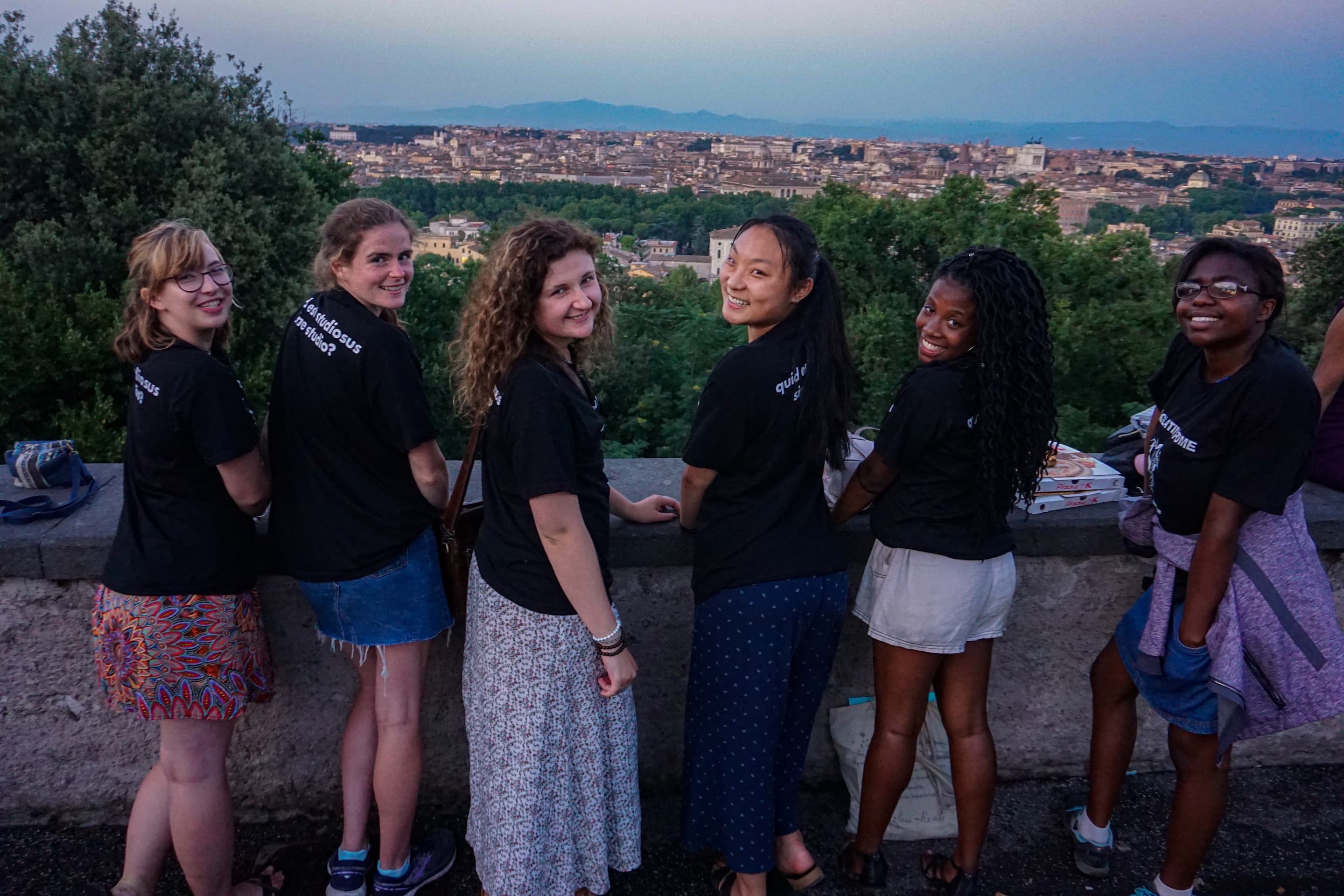
A farewell party on the Janiculum
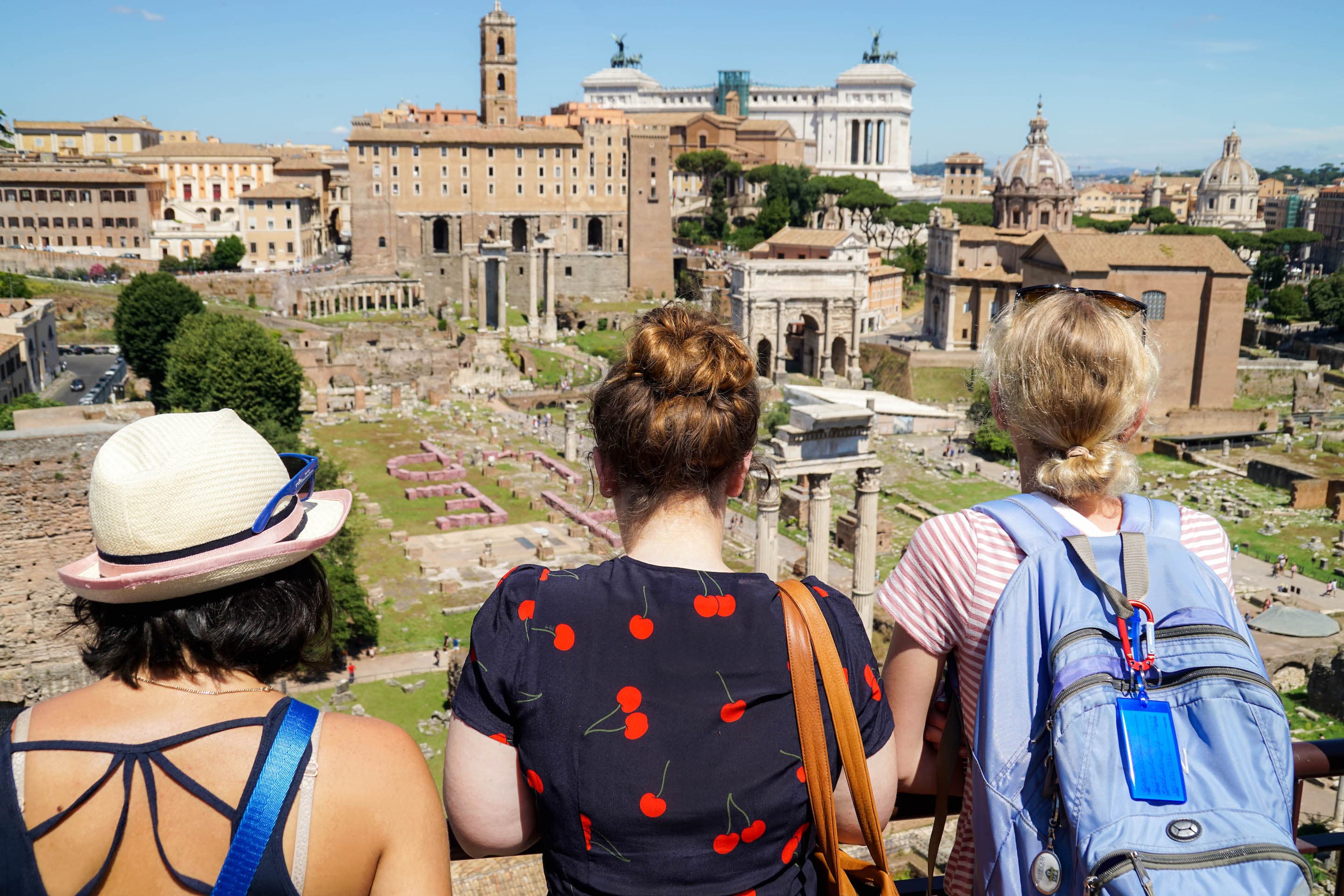
Behold the Roman Forum
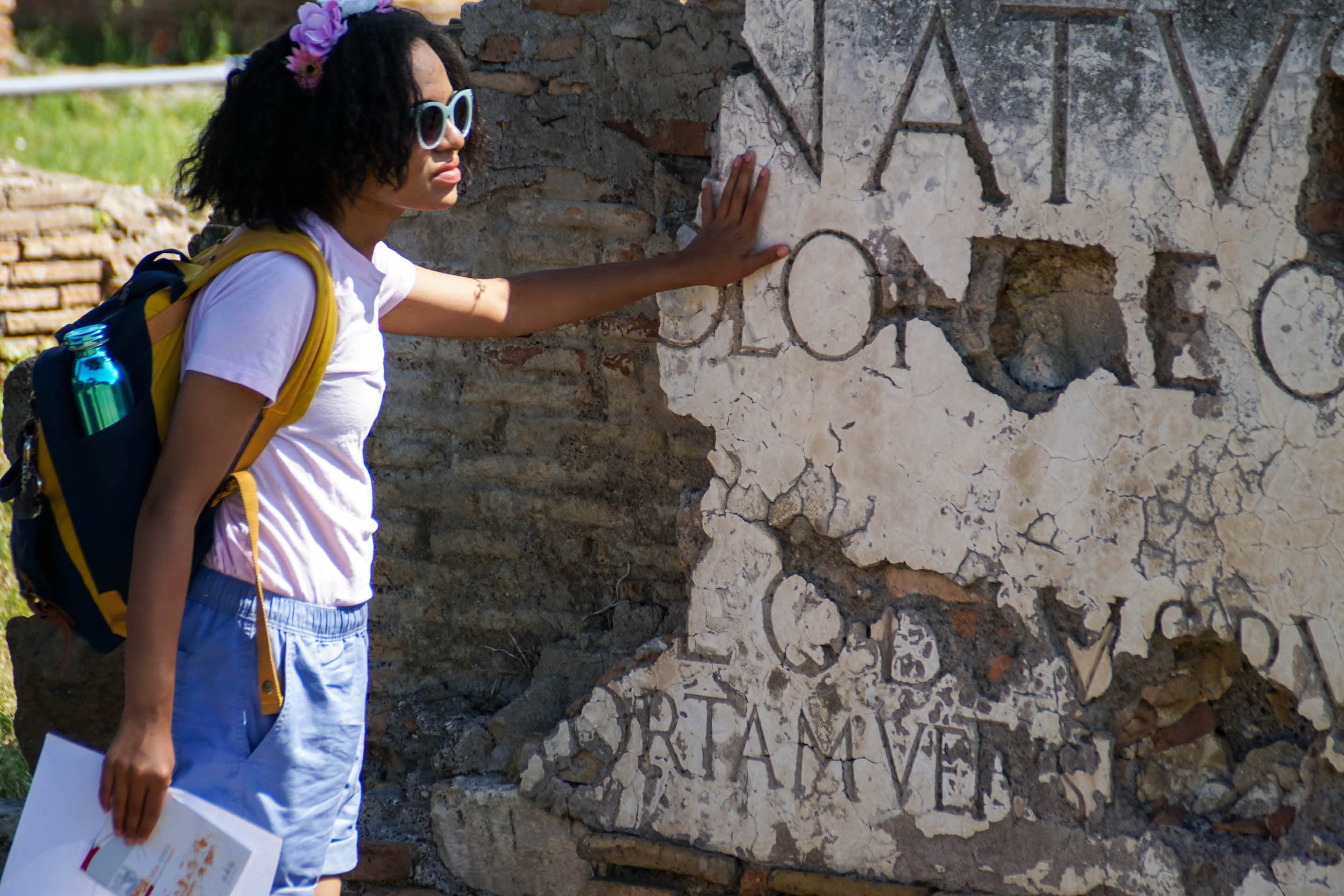
Enjoying Latin inscriptions at Ostia Antica
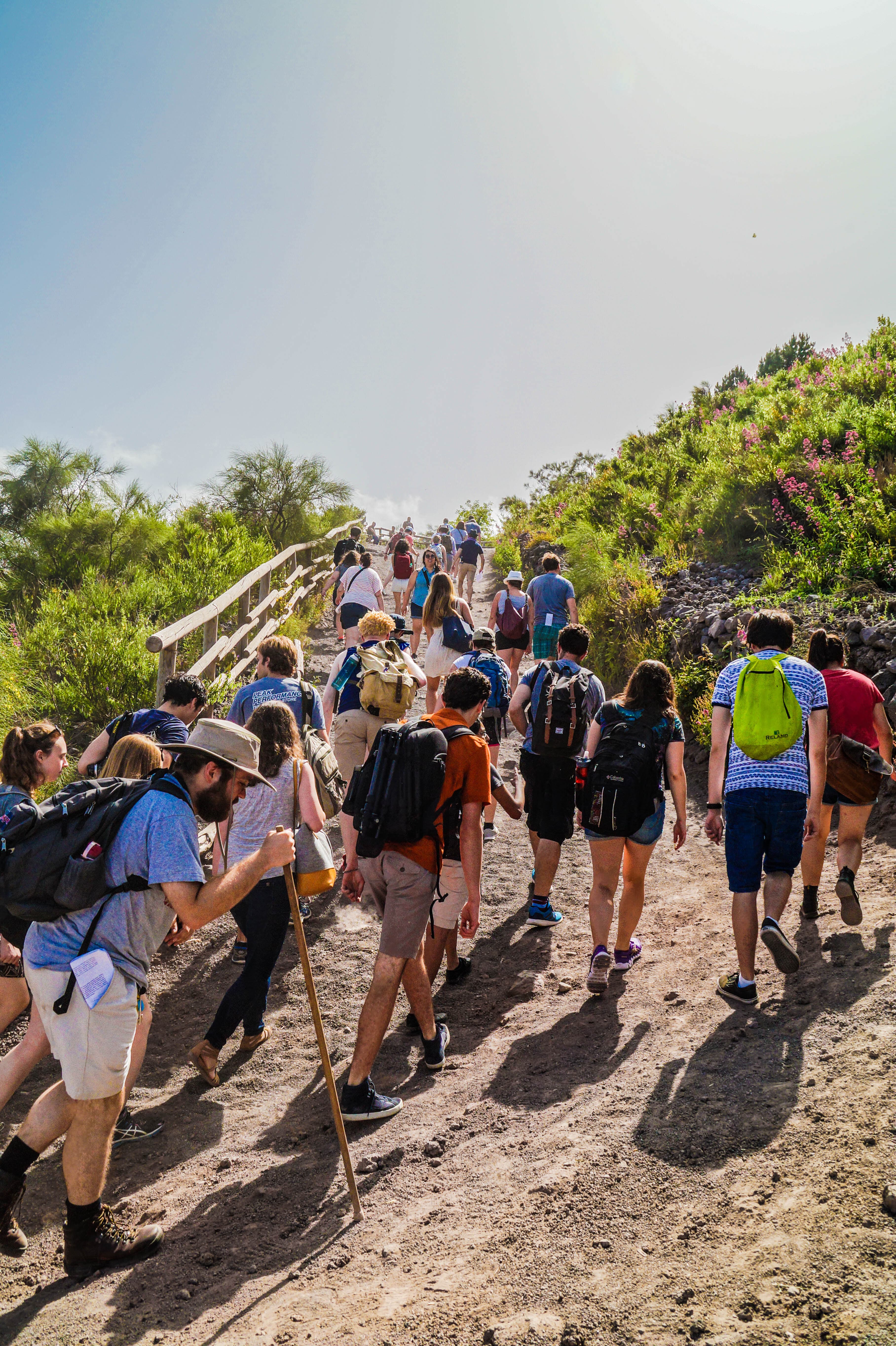
Hiking up Mt Vesuvius in Naples
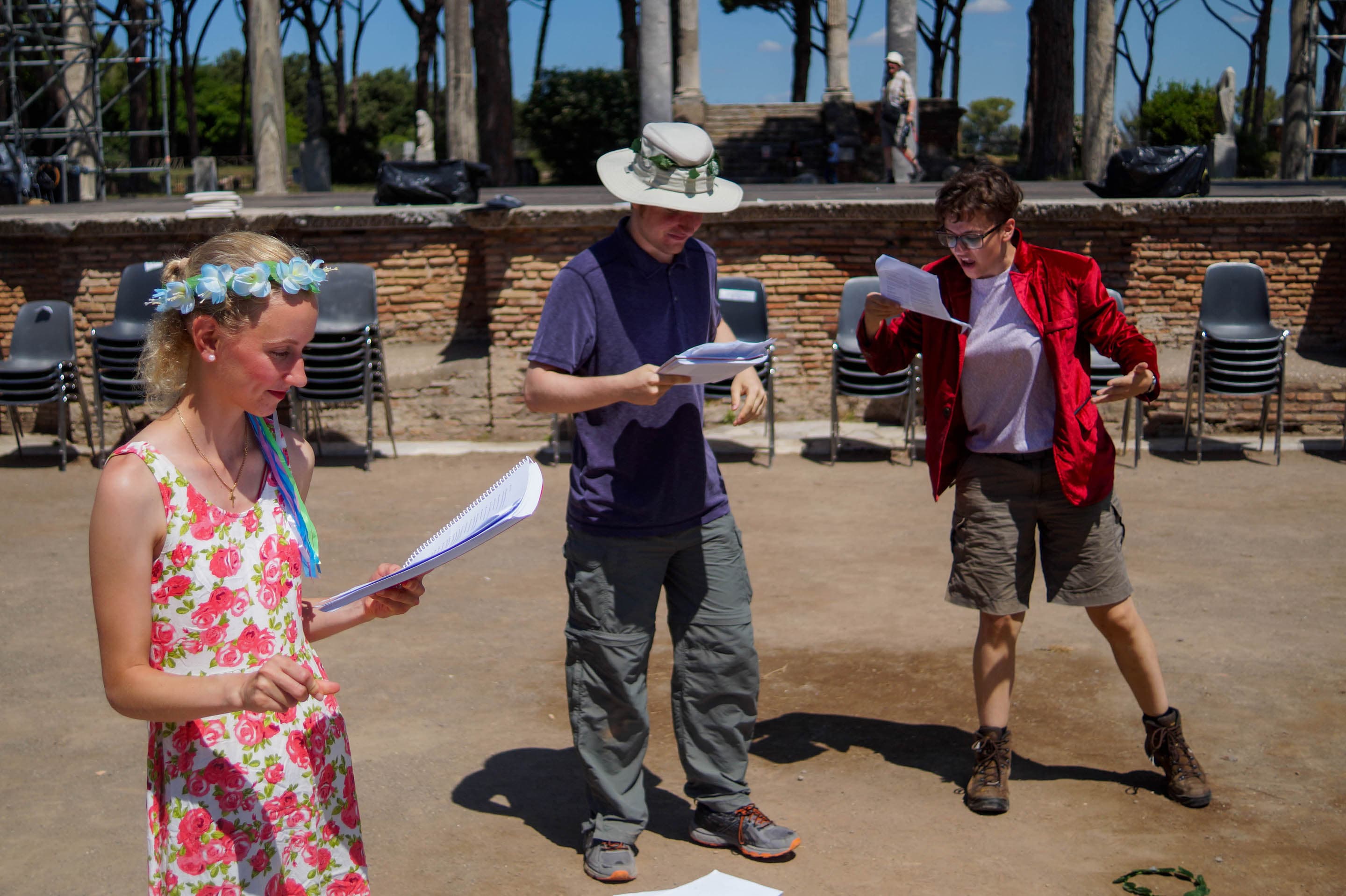
Performing at the ancient theater in Ostia
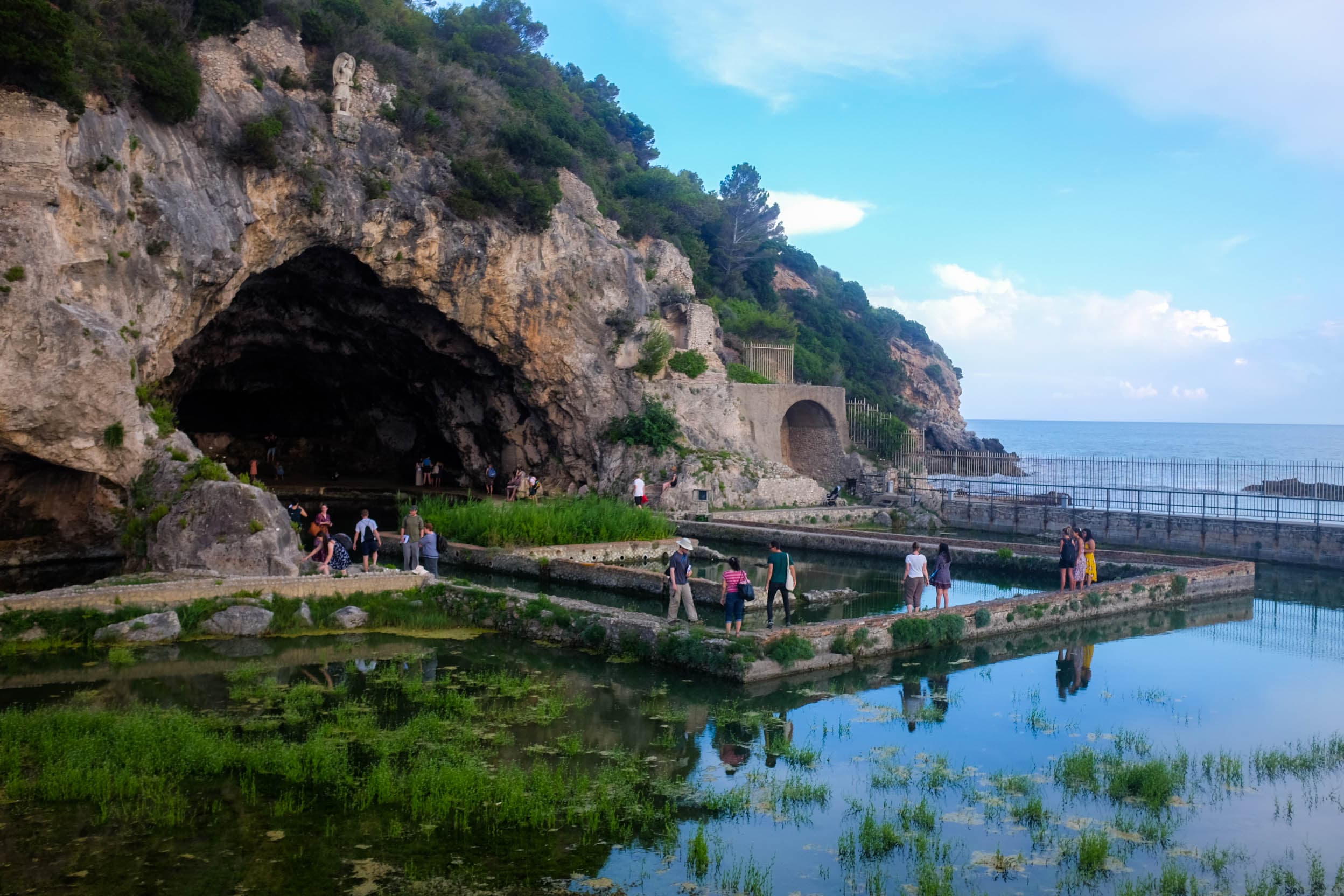
The grotto of Tiberius in Sperlonga
Tuition and Fees
The tuition for Living Latin in Rome is $2500. This includes instruction, transportation to and from site visits, museum and site admissions, housing during the program’s weekend trip to Ravenna and Rimini, and three group meals. It does not include housing in Rome. Airfare and transportation to and from the airport are not included, and participants must bring their own edition of the course’s main text.
Housing and Other Costs
Participants must arrange their own housing in Rome (housing during the weekend trip will be provided by the Institute). The Paideia Institute has negotiated discounted group rates with trusted housing providers in centrally located hotels. Approximate rates for each type of lodging for the duration of the program are listed below. Contact information for housing providers and group discount codes (if available) will be provided upon acceptance. Participants will also be able to contact each other to arrange shared housing if desired.
Estimated costs of housing at suggested hotels are below (subject to availability):
- Dorm accommodation: $700–$900
- Hotel room shared with another program participant: $1200–$1600
- Single Hotel Room: $1900–$2500
- Apartment: $2400–$3300 (total price for a 60 square meter apartment for 3–4 people)
Airfare, transportation to and from the airport, daily expenses for meals, and spending money are not included in the cost of tuition. The cost of life in Rome can vary greatly depending on one’s tastes, but at the very least we recommend that participants budget €25/day for food. Please consider the exchange rate when planning your budget.
Scholarships
The Paideia Institute is able to offer a number of full and partial scholarships to participants with demonstrated financial need. High school Latin teachers interested in attending Living Latin in Rome are encouraged to apply for the Amy High Scholarship. Please visit our scholarships page to learn more and to submit an application. Scholarship applications must be submitted in addition to the admission application by March 1, 2027.
Request an Application
Please submit your completed application by March 1, 2027. Applications received after March 1 will be considered on a rolling basis while space is available.
What People Are Saying
"I am already trying to plan my next Living in Latin opportunity! The immersion in the Latin language while simultaneously visiting the sites that were being read and discussed was an unmatched experience. The instructors and participants were all so welcoming and excited to be on the journey together." — Stephanie Mercer '26
"Fantastic experience reading and speaking Latin at the sites where the language was forged. Regardless of your skill level, you'll find something here to stretch you." — Theodore Janiszewski '26
"A great experience that is definitely worth its price. A deep dive-in into Rome and Roman culture." — David Stulz '26
"The Living Latin in Rome program has been one of the most rewarding educational experiences I've ever had. What makes it exceptional is its ability to make Latin feel like a living language. Through constant immersion, I gained confidence speaking, thinking, and interacting in Latin in ways that years of traditional study never achieved.
The curriculum was outstanding. Reading Ovid while walking through the Roman Forum and Sulmona and exploring the city's monuments and museums alongside the texts brought Latin literature vividly to life. Rome itself became an extension of the classroom. Just as impressive were the instructors, whose scholarship, enthusiasm, and encouragement created an environment where students felt challenged, supported, and inspired every day.
I leave the program with stronger Latin, a deeper appreciation for Roman literature, and renewed excitement to continue reading, speaking, and teaching the language. I recommend this program without reservation to anyone who wants to experience Latin as a living language." — Tally Beck '26
"I am so glad I participated in this program, not only for a wider breadth of Latin knowledge, but also because of the spoken Latin I can now infuse into my classes." — Amy Skillicorn '25
"Spoken Latin combined with various site visits pertaining to our classical studies creates a profound learning environment in which one is constantly reminded why they chose to partake in classical literature. One can use such an experience to raise their Latin learning journey to profound heights." — Sutherland Smith '25
"This has been the best summer school I have ever attended. Latin came to life in a way that it never has before, and I was able to experience it as a living language that can be used for textual exegesis and for everyday communication. This program has reminded me why I became interested in Latin in the first place, and I look forward to continuing my study of the Latin language and its amazing epic tradition." — Sam Lewis '24
"Reading Virgil at sight, discussing him solely in Latin, and doing so before sights that his own eyes may well have beheld -- all sweet delights afforded me by the Institute this summer, over which presided three professors matched in energy only by their erudition. Paideia succeeds in offering an experience delicately poised between labour and leisure: in the classroom rigorous devotion to language and poet feed the mind, while thematic expeditions -- Palatine vistas and Avernal depths -- nourish the soul. All this, too, is enjoyed alongside the hearty camaraderie of newfound friends. Not the most academic of courses -- one does more than sit in a classroom from dawn till dusk -- but sincerely recommended to any who wish to know a work as much through ('lived') context as through text itself." — Marko Trandafilovski '24
"My teaching in general, and of Vergil for AP Latin in particular, has been reinvigorated and energized. We got through a lot of the Vergil curriculum and visited associated places like Cumae, and discussed all of that in Latin extensively, and intensively! I will be a better teacher because of the program." — James Hunt '24