


Why the Odyssey Mattered––and Matters
Paul Cartledge·January 13, 2026
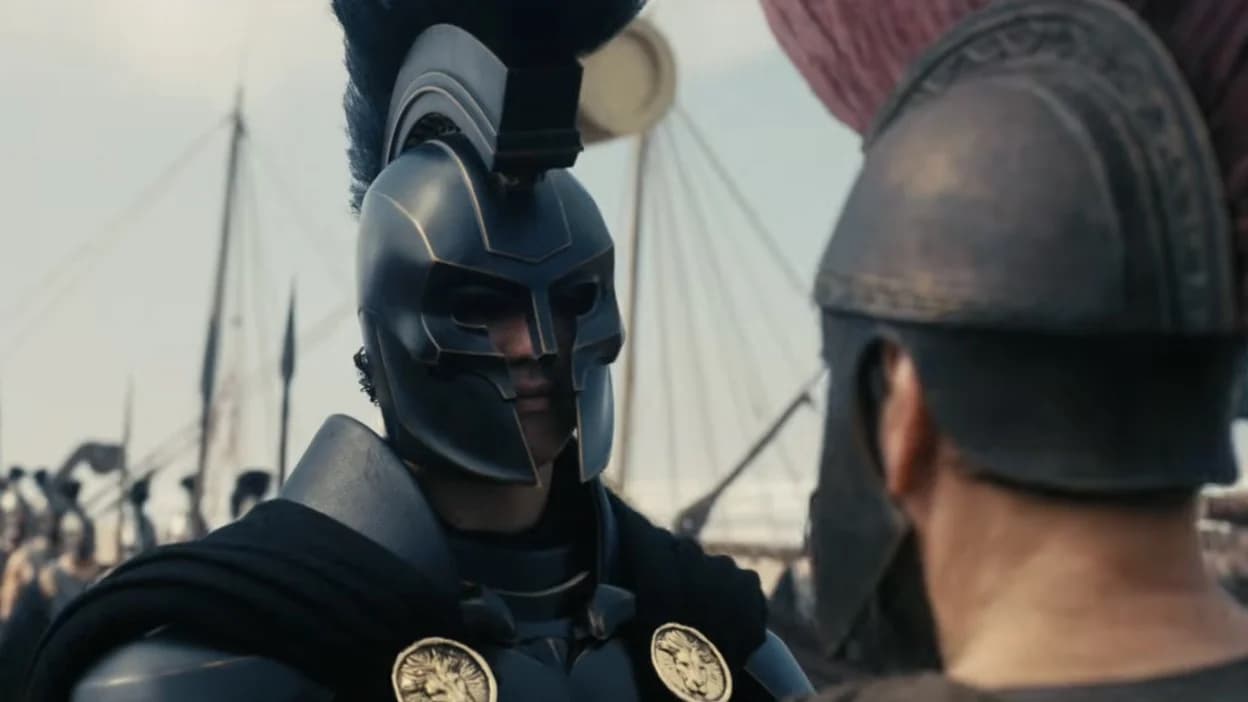
As we await yet another rendition of the Homeric epic, some reflections on why the nostos continues to keep us hooked.
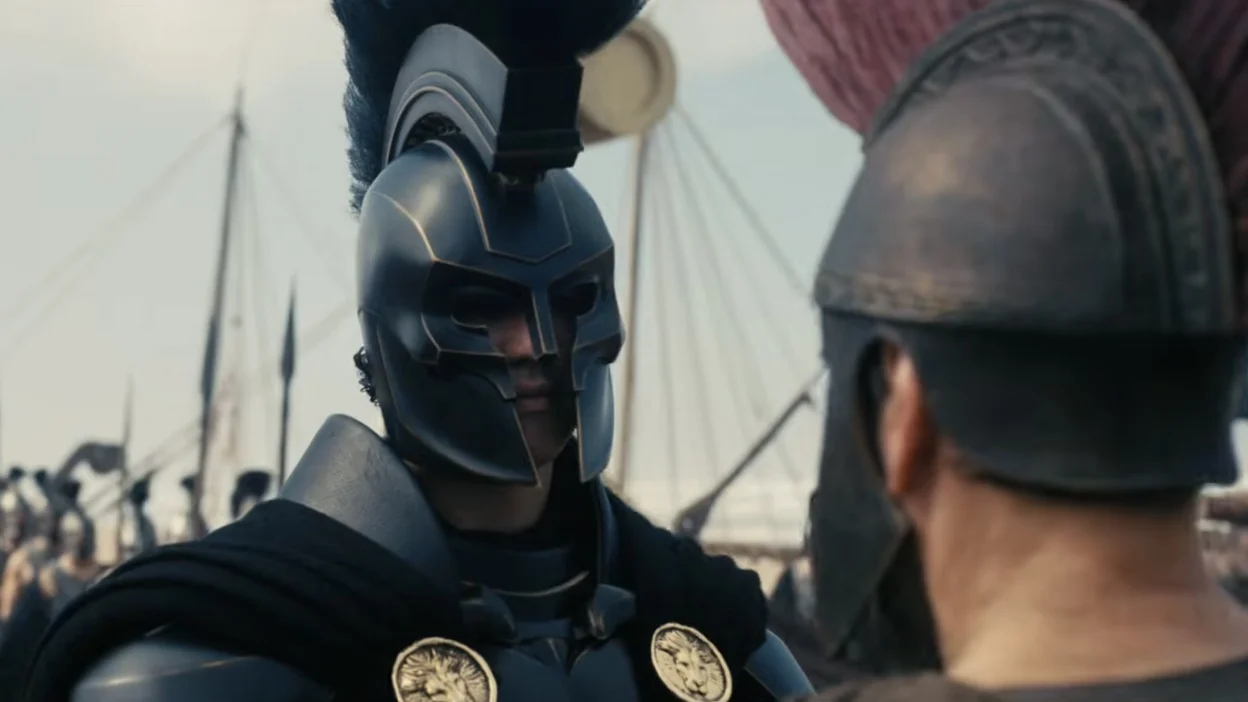
Christopher Nolan's 2026 feature film Odyssey is a sell-out! Yes, you read that correctly. The film's not yet been aired, possibly not yet received its final cut. But punters – fans probably more of Nolan than of Homer, who knows – have already paid good money to be among the first to watch it in person in movie theaters. The movie comes too hot on the heels of (yet another) new English translation, this one by Bard College professor Daniel Mendelsohn. What can it possibly be about either Homer or the Odyssey that attracts such attention? Or, to put that another way, why should the Odyssey still matter to us today, some 2700 years after its creation?
What’s in a name?
The long epic poem (some 12,100 dactylic hexameter lines) that we know as ‘The Odyssey’ starts anonymously with the word andra, ‘man’ (adult male human being). No name, no packdrill. How apt! In the famous encounter between the poem’s eponymous hero and a Cyclops (one-eyed monster) called Polyphemus (‘multiply famous’), Odysseus – by then long since named – taunts his monstrous adversary horribly and hybristically by telling him his name is ‘No Man’. It’s a bit of a sick joke, whose punchline is delivered soon after, when Polyphemus tells his fellow Cyclopes that 'No Man' has tortured him. But the point is that names mattered, and mattered a great deal, to the author or authors of the Odyssey, a work that takes its own name from just one of the several names by which its hero was known.
In antiquity Greek Odysseus could also be called Oulixes, and in Latin he became Ulysses. But Odysseus predominated, and that’s not least because it’s what scholars call a ‘speaking name’: etymologically it’s related to verbs meaning to rage or be enraged, and to lament. Entirely appropriate for the ‘man’, one of whose two most familiar and characteristic epithets is in Greek polutlas, ‘much suffering’ or ‘much enduring’. Truly, Odysseus had a very great deal to suffer and endure during his nostos (return journey, whence our ‘nostalgia’) from Troy (in what’s today northwest Turkey, overlooking the Hellespont or Dardanelles) to his rocky island-kingdom of Ithaca located off northwest mainland Greece, not far from today’s Corfu.
Yet the epithet that poet Homer (I’ll come on to who or what ‘Homer’ was) chose to apply to the as yet anonymous Odysseus right at the start of the poem was not polutlas but another poly- compound adjective: polutropos. Translating Homer can be quite straightforward, partly because the poet or poets dealt in formulas, sometimes short phrases, sometimes whole episodes, since they facilitated both the process of oral, extempore composition and the audience’s assimilation of what they were hearing – over several hours, possibly even several days. But sometimes it can be a case of (as the Italian saying has it), traduttore traditore, ‘translator traducer’; or, as we say, something essential can all too often get ‘lost in translation’. Translating polutropos is a case in point. (Mendelsohn goes for 'roundabout' - not my choice.) Literally, most basically, the epithet should or could mean ‘of many turns’, but what sort of ‘turns’ are the ones that Odysseus experiences actively or passively? Are they vicissitudes? Well, that would be totally apropos: rarely can a single human figure have experienced/suffered as many and as violent vicissitudes. It reminds us that our word ‘travels’ is etymologically connected to ‘travails’. Alternatively, however, might Odysseus’s ‘turns’ be identified as wiles or cunning stratagems? Certainly, an Odysseus ‘of the many wiles’ does capture one absolutely fundamental and essential quality of the man – even if to employ them he did sometimes require divine assistance. Besides, not even all his superhuman resourcefulness could prevent him from ending up in a pretty sorry state, shipwrecked and alone, on the magic-realist island of Phaeacia (sometimes identified with Corfu), from which he had to be whisked by overnight boat back finally to his own, very much less magical, very much more sordidly everyday Ithaca.
Poet or Poets? Who was ‘Homer’?
Rather puzzlingly, the ancient Greeks themselves couldn’t agree who Homer was – by which I mean that half a dozen cities laid claim to him as their most famous ‘native son’. And what exactly did he compose, and how? The Greeks all agreed that ‘he’ somehow composed not only The Odyssey but also The Iliad, an even longer epic poem dealing with a situation anterior to that of The Odyssey, namely the fighting of many, many united Greeks over ten long years ostensibly to rescue the captured Greek queen of Sparta, Helen. Yet The Iliad doesn’t end with the fall of Troy and rescue of Helen: that’s because, despite its title, it’s as much ‘about’ one Greek hero, Achilles, as the Odyssey is about Odysseus.
On the other hand, modern expert Homer scholars tend not to agree with the ancients that one and the same poet somehow created both poems. They detect differences not only of language and style but of morality and sentiment, quite apart from subject matter. I agree. But more important even than distinguishing the composition of the two poems is to understand the long and complicated processes whereby they came to be, to be created as such. Both are oral formulaic poems composed in an artificial mash-up dialect of Greek never actually spoken outside the context of an epic recital, and composed over a period of centuries, maybe as many as five or more. At some point, of course, they had to be written down, to become distinct artefacts, and this is where – or so I tend to suppose – the peculiar genius of the (two) ‘monumental’ composers came into play.
Out of the swirling mass of narrative poetic ‘lays’ about aspects of the entire ‘Trojan War’, they selected, respectively, the ‘Achilles theme’ and the ‘Odysseus theme’. As for the latter, many others besides Odysseus successfully effected the nostos from Troy back to their Hellenic home places, but it was only Odysseus whose nostos was so successfully woven together and focused poetically that it became emblematic of all. And, one must add, despite Odysseus himself by no means being the premier king or leader of the Greek heroes at Troy – that was Agamemnon; nor was he the greatest warrior hero – that was Achilles. Odysseus therefore – the fictional poetic figure of Odysseus, that is – had to do service as an exemplar, an exemplar of what any and every nostos might entail and represent to the poem’s audiences over many, many generations and even historical epochs. And this 'everyman' quality of Odysseus and his story begins to help explain why the epic poem as a whole mattered to its original audiences, and why it does and should matter still to us.
Odysseus in His Own Words
Let us briefly introduce the Odyssey’s contents and mode of exposition. What’s not obvious, if one reads, say, Mendelsohn's translation as a single chronological sequence of picaresque episodes between them occupying ten years (Fall of Troy + 10), is that the tale not only is told in a series of giant flashbacks but is often told by none other than Odysseus himself…What, told by the not only polutlas but also polutropos Odysseus, who must surely therefore be the archetypal ‘unreliable narrator’? We can’t say we weren’t warned, and it's a warning in the first place to be sceptical mainly of the ‘truth’ (in the sense of correspondence to fact) of what we are told. However much 'history' may or may not lie behind the story, the Odyssey itself is not a history but a unique combination of folktale, fiction, and saga.
That’s easy enough to see when it comes to the plethora of monsters Odysseus and his men have to encounter: besides Polyphemus, there are Scylla, Charybdis, the Laestrygonians, you name them. And it’s easy too for us to be sceptical when it comes to the divine figures who play their variously crucial parts – from goddess Athena who’s Odysseus’s chief protector to the delectable Calypso (with whom Odysseus spends more than two thirds of his nostos – despite the ultimate pull of his longsuffering and no less resourceful Spartan wife Penelope), and the far slipperier Circe. But what of the poem's geography?
A fun parlour game over the years has been to try to identify the locations given by Homer with actual eastern Mediterranean landmarks - e.g. 'Phaeacia' with today's Corfu (the Venetian name for what the Greeks called Kerkura, the Romans Corcyra). But - and it may seem heretical even to raise the question - is today's island called Ithaca Homer's - and Odysseus's? Native Ithacans stoutly defend the identification, but there's good scholarly authority for questioning it. And looking elsewhere - as the late Robert Bittlestone has done.
Why the Odyssey Mattered - and Matters
But what finally of the poem’s deeper resonances or meanings for its ancient audiences? And what has made the poem – so far – immortal and meaningful for us too? I can offer one suggestion in answer to the former question. The Odyssey teaches or suggests by exemplification what moral and political behaviour or behaviours should be considered properly ‘Greek’ – and acted upon. At the time of the poem's final creation, many thousands of Greeks were upping sticks and shipping out west from the Aegean basin to found new homes in the golden west (Sicily, South Italy) - and encountering both welcome and resistance from local 'native' non-Greek 'barbarians'. Maintaining 'Greekness' was all.
Far more difficult is to attempt to grasp what explains the poem’s extraordinary post-creation, or post-antique, reception and its contemporary popularity. Part of it is the way in which the story is told, using techniques of zoom and flashback that we today would identify more obviously with the world of Christopher Nolan than that of Homer. Another part is the sheer excitement - and ethical implications - of this overall quest story: of recovery, reunification - and revenge. In the figure of Odysseus's wife Penelope, originally from Sparta, the figure of Odysseus meets his match in more senses than one. And then there are the magical episodes or incidents strung - like Odysseus's great bow - all along the storyline. We each will have our own favourites. Mine is the reunion of a disguised and travel-weary Odysseus with his top hunting dog Argos after twenty years - whom he barely recognised but who, doggedly, recognised his old master, though the effort was too much for him and the heart within him burst. Odysseus shed a silent tear. My eight-year-old self wept buckets, for half-an-hour or more.