


Odysseus as a Philosopher: On Homecoming and the Meaning of Human Life
Antonio Cimino·October 1, 2025
On Homecoming and the Meaning of Human Life
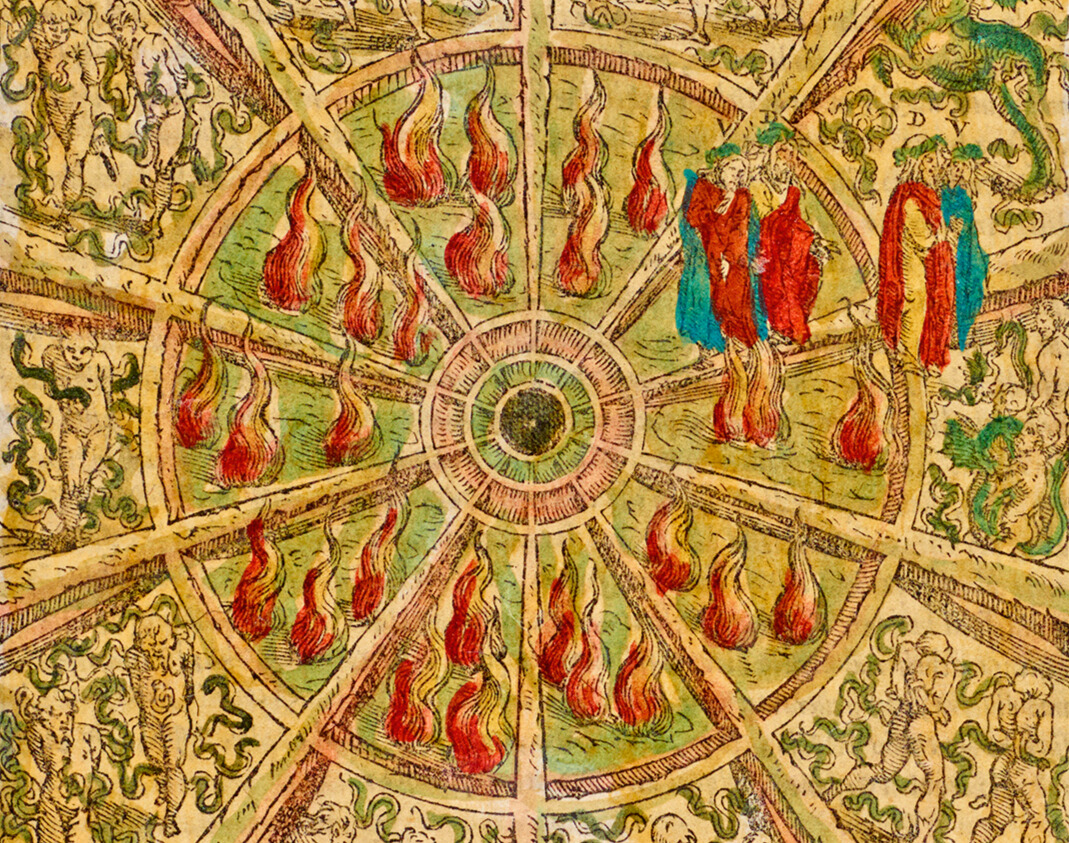
In Dante’s Inferno (XXVI.118–20), Ulysses (the Latinized name of Homer’s Odysseus) addresses his companions with these famous words: “Considerate la vostra semenza: / fatti non foste a viver come bruti, / ma per seguir virtute e canoscenza” (trans. Mandelbaum, modified: “Consider well the seed that gave you birth: / you were not made to live your lives as brutes, / but to be followers of virtue and knowledge”).1 Dante portrays Ulysses by using Aristotelian terminology. His verses echo the first lines of Aristotle’s Metaphysics, where we read that all human beings are characterized by a natural desire to know. Moreover, the intertwining of knowledge and virtue is a major topic of the Nicomachean Ethics, in which Aristotle concludes that the highest form of virtue and happiness lies in the contemplative life, that is, the philosophical way of living. Therefore, Dante’s Ulysses seems to embody the ideal of a philosophical existence devoted to the pursuit of knowledge. However, I am not sure to what extent the portrayal of Ulysses as a philosopher is accurate. Let us have a closer look at how Aristotle depicts the existence of the philosopher in the tenth book of the Nicomachean Ethics.
According to Aristotle’s conception of the philosophical life, which can partly be traced back to Plato and enjoyed much popularity in medieval philosophy and theology, the philosopher can gain insight into the principles of reality by adopting a contemplative, or theoretical, attitude. Aristotle provides a detailed account of philosophy as a theoretical form of life, which should resemble the divine life as much as possible. It requires concentration and freedom from occupations that typically trouble human existence, pursues knowledge for the sake of knowledge itself, and eventually provides spiritual pleasures. This way of life coincides not only with the highest form of knowledge but also with true happiness.
If we compare Homer’s Odysseus and Dante’s Ulysses with the Aristotelian philosopher, we discover not only similarities but also profound differences. The Aristotelian philosopher and Odysseus-Ulysses are similar as they both strive for knowledge. In so doing, they try to fulfill human beings’ distinctive potential, that is, their capacity to discover an intelligible order in the world. They therefore both seem to be philosophers in the original meaning of the word: they love, and constantly try to attain, wisdom and knowledge.
Nonetheless, Odysseus-Ulysses’ life is not a theoretical existence in the Aristotelian sense. We can hardly say that he is happy. His return voyage to Ithaca is an archetypical portrayal of human suffering as he experiences virtually all forms of human pain. Having seen firsthand the most destructive human behaviors during the Trojan war, he longs to return home, but must face all kinds of perils. The greatest threats to his life come from nature, in particular the sea. His acumen and skills are the only tools that could help him escape Poseidon and his one-eyed son’s brutal violence. The conflict between Odysseus and Polyphemus can be read, among other things, as a representation of humanity's attempt to cope with the insurmountable power of nature.
Interestingly, his intelligence is not the only valuable resource he can resort to when facing extreme difficulties. His insatiable curiosity also brings him experience in facing these highly perilous situations. Odysseus’ appetite for new experiences does not bring the divine pleasures of the theoretical life. Instead, it offers mortal risks and extremely painful experiences—e.g., the anguish and suffering caused by the horrendous death of his companions in the Cyclops’ cave. The same desire to know exposes him to the Sirens’ song, thereby putting his own life in danger.
Another profound difference between the Aristotelian philosopher and Odysseus-Ulysses concerns the type of knowledge they strive to obtain. Their lifestyles are irreconcilable. The contemplative life of the Aristotelian philosopher is defined by the peace and tranquillity of an existence committed to theoretical knowledge, far from the turbulence and disturbances of common human lives. The philosopher enjoys the greatest and purest pleasures that derive from contemplation. As Aristotle famously says in the tenth book of the Nicomachean Ethics, the philosopher strives to become as immortal as possible, that is, as close to the divine as possible, by investigating the eternal and immutable foundations of reality. The pure, contemplative life is in fact the prerogative of the divine.
Odysseus-Ulysses seems to go in the opposite direction. His lifestyle is an adventurous, tumultuous, and vulnerable existence that is constantly governed by risks and the possibility of death. We can describe Odysseus-Ulysses’ life by inverting Aristotle’s dictum: he strives to become not as immortal as possible but, on the contrary, as human as possible, by navigating our mortal life and experiencing all its positive and negative dimensions. He is therefore not a philosopher in the Aristotelian sense, because he does not want to attain divine knowledge. He does not pursue a type of knowledge accompanied by the feelings of serenity, tranquillity, and imperturbability that arise when we contemplate and gain insight into the ultimate and eternal principles of reality. This is particularly clear in the case of Dante’s Ulysses, who confronts a typically tragic situation. On the one hand, Ulysses and his companions must pursue knowledge and virtue, which differentiates them from brutes; they cannot do otherwise, because they are humans. On the other hand, they must pay a high price for their pursuit “of virtue and knowledge,” which will end in a fatal shipwreck.
If this interpretation is correct, Odysseus-Ulysses’ voyage is not only the superb literary story of an ancient hero who travelled through the Mediterranean, but also a majestic depiction of the meaning of human life in general, including the tragic condition of humans, who pursue knowledge by exposing themselves to mortal risks and pain. This is the astonishing modernity that continues to echo through both Homer’s Odyssey and Dante’s Inferno.
While we can conclude that Odysseus-Ulysses is not a good example of the Aristotelian philosopher, I would suggest considering him a philosopher in the Platonic sense. It is true that Plato is also a supporter of the idea of philosophy as a theoretical life. The attempt to imitate the divine is an essential component of the Platonic philosopher’s existence, and the idea of philosophy as contemplation is ubiquitous throughout the Platonic dialogues. However, Plato’s description of the philosophical life comprises aspects and ingredients that we recognize in Odysseus-Ulysses’ existence as well. I would like to briefly mention two interesting points.
The Platonic philosopher seems closer to the human condition than the Aristotelian thinker. Plato and Aristotle put different emphases on immortality as the main goal of the philosophical life. According to Aristotle, the philosopher must pursue the unreachable goal of immortality in this life, by living a contemplative existence as much as possible. Plato instead thinks the philosopher must pursue the immortality of the afterlife by cultivating the mortality of this life. In the Phaedo, Socrates argues that the philosophical life comes down to caring for the mortality that defines human existence. He embraces it along with his humanity, as Odysseus does, when he refuses Calypso’s promise of immortality, thereby treasuring his love for Penelope—a truly human love.
Moreover, the Platonic philosopher’s life is far from the contemplative tranquillity of the Aristotelian thinker. In the sensible world, the philosophical soul is far from its real home, that is, the realm of the ideal forms, as Plato reminds us, for example, in the Phaedrus. Philosophy is precisely the attempt to return home. It is a difficult, painful, and dangerous voyage, because the soul is trapped into the body and is engaged in a constant struggle with it. Odysseus’ voyage (i.e., his nostos, homecoming) is equally difficult, painful, and dangerous, and can be interpreted as the voyage of the philosophical life in this world. In Plato, we find different variants of the idea of philosophical homecoming. We can recall, for example, his conception of reminiscence, but I would like to draw particular attention to his famous allegory of the cave, in which Plato presents and develops the idea of philosophy as homecoming in an intriguing way.
In the allegory of the cave, philosophy is homecoming in two different senses. First, philosophy means returning home when we set ourselves free from the chains of everyday experience and imperfect knowledge, thereby ascending to the philosophical contemplation of ideal forms. But another homecoming takes place when the philosopher re-descends into the cave, that is, when the philosopher returns to the human world. Like Odysseus’ voyage, both philosophical journeys (upwards, downwards) are necessary, difficult, and painful and involve embracing our human condition along with its distinctive mortality, dangers, shortcomings but also unique possibilities, because we were not made “a viver come bruti, / ma per seguir virtute e canoscenza.”
1 Both the Italian text and the English translation are taken from Columbia University's Digital Dante.