


Ovid's Immortal Tapestry: Women of the Metamorphoses
Hannah Gumpert·April 8, 2026

2026 Paideia High School Essay Contest Winner
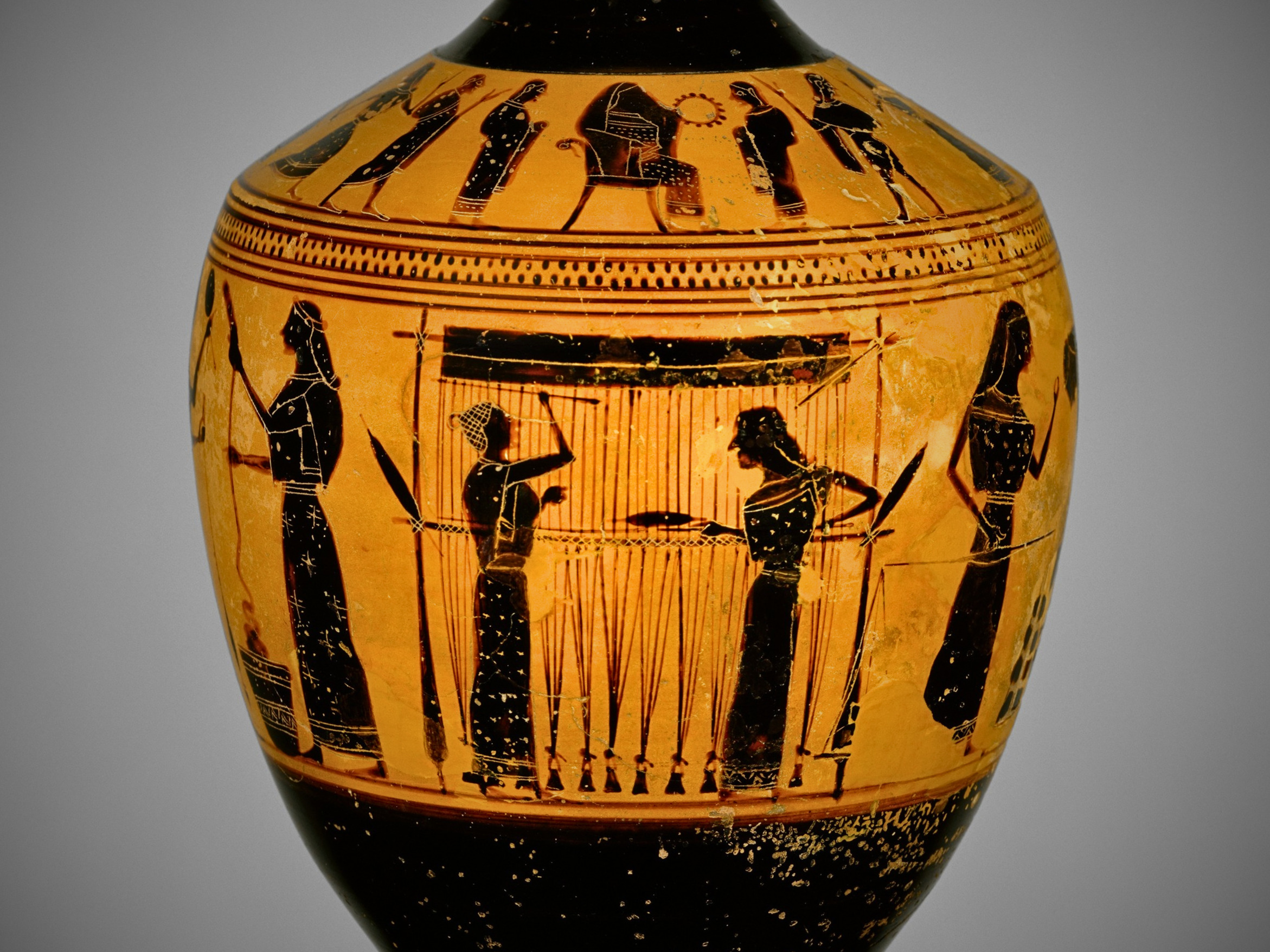
Ovid’s Metamorphoses reveal a sharp gender divide in ancient mythology. Caesar’s merits grant him apotheosis while Lycaon’s cruelty transforms him into a wolf; pursued, women like Daphne and Syrinx find their only escape in metamorphosis—and even then they are not free. Though there are exceptions, for men, transformation often comes as a punishment or reward; it reflects what they do. For many women, however, transformation reflects what is done to them. Ovid inherited a tradition of storytelling that gave little power to women; ironically, however, by chronicling these injustices, he ensured that their silence was not absolute.
I was raised on a diet of Greek and Roman mythology, D’Aulaire’s myths for bedtime and the Odyssey around campfires. I always loved the stories of heroes and monsters, a passion that only grew as I began learning Latin and reading the Metamorphoses and Aeneid in their original language. As I got older, though, many of the stories didn’t sit right with me anymore: so often, it was normalized for the victim to be punished and the crime forgotten. I began to wonder if this was just as prevalent outside of stories. Was there no justice or accountability in the ancient world?
At first, when I read the Metamorphoses, that was the lens through which I viewed it, and I found little to counter me. Across the stories, young women are literally objectified. Daphne’s leaves crown Apollo’s brow; Pan picks up Syrinx’s reeds and uses them as his instrument. The poem suggests the male gaze is fundamentally transformative, the physical metamorphoses reflecting deeper societal implications. Divine power merely completes what metaphorical objectification begins: dehumanization.
I was left uneasy. Could the stories I loved be so deeply dismissive of women’s suffering?
It wasn’t until I got to Ovid’s retelling of Arachne that my idea of the Metamorphoses’ message on women started to change. For the first time, I read in detail what the young weaver had embroidered in defiance: the stories of Europa, Alcmena, Aegina, Leda, Isse, Melantho, Asterie, so many women tricked and assaulted, stripped of voice—the crimes of the gods; their victims. Ovid has not forgotten them.
At its core, the Metamorphoses are meant to document the human experience. Sexual violence, both then and now, is a part of that experience—one so often subjected to erasure and stigmatization. Even today, speaking out and telling these stories brings backlash. But while it can be so difficult to bring the gods—to bring powerful men—to justice, in the story of Arachne, I see someone beginning to try.
After beholding Arachne’s creation, Minerva immediately destroys the tapestry and the story it tells. rupit pictas, caelestia crimina, vestes, Ovid writes: she tore up the image of divine crimes. Why is that? Ovid is a poet; he knows the power—and danger—of art. Arachne challenged the untouchable gods, laid bare their terrible acts. In her weaving, they were no longer free from reproach; perhaps if that tapestry had remained, movements like MeToo might not feel so modern.
In the conclusion of the Metamorphoses, Ovid writes:
iamque opus exegi, quod nec Jovis ira, nec ignis,
nec poterit ferrum, nec edax abolere vetustas.
And now I have completed my work,
which cannot be destroyed by Jove’s rage,
nor fire, nor iron; not even the maw of time.
Art becomes an agent of change that rivals the gods. Ovid himself is the final, true metamorphosis, his poetry granting the “better part” of him an immortal ascent, super alta perennis astra, into a place beyond the stars. His transformation, unlike nearly all the others, contains no trace of divine influence. More than two thousand years later, Ovid’s work touched me and I, too, was changed. This is the power of storytelling: not even the fury of the gods can erase its effects, no matter how much they might wish it could. It persists even when its creator is silenced.
While we may not live in a world of gods and monsters, the lessons we learn from the Metamorphoses carry into our daily lives. It is a reminder that to be human is to experience constant transformation, that our lives are anything but stagnant. It teaches us that the world we live in is not always fair, that everything can change in an instant. And it shows the way powerful people can do awful things and get away with it—unless someone speaks up.
Arachne tried, and though Minerva attempted to destroy it, her creation has endured through the millennia. After all, Arachne’s tapestry may not have survived—but Ovid’s did.
To tell a story begins a transformation. To share it makes it eternal.
Hannah Gumpert is a student from Los Angeles whose writing has been recognized nationally, including with Scholastic’s American Voices award. She’s an editor for the JGirls+ magazine, leads her school’s literary journal, and performs annually with the Shakespeare Youth Festival.