


The Odyssey is Complicated
Mark Buchan·March 5, 2026

And you might be misremembering some of its major narrative episodes.
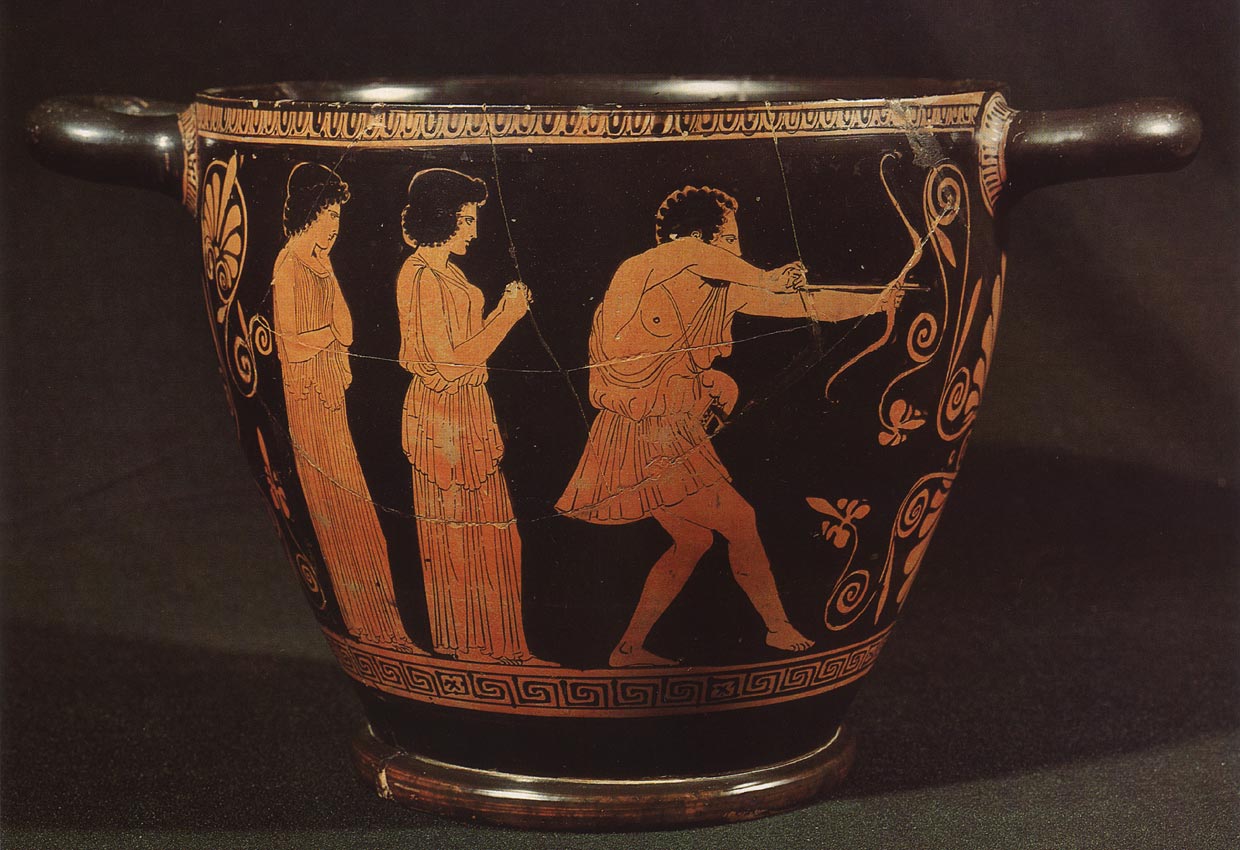
A bit like fighting over Woody Allen controversies or the Palestine-Israel conflict, it’s often difficult to discuss The Odyssey because people, not to mention scholars, get basic narrative facts wrong. To illustrate, let me describe some major turning points in the poem. 1. Odysseus returns home, wins the bow contest, and thus establishes his right to rule on Ithaca. 2. Penelope and Odysseus ‘recognize’ each other through the ‘sign of the olive tree bed’, a secret sign known only to the two of them. 3. The Odyssey ends in a ‘happy-ever-after’ scenario, with Odysseus safe at home in Ithaca, his household restored. As the more skeptically-minded reader might have already realized, the problem with these descriptions is that they are at best highly misleading, if not demonstrably false. And so our discussion begins.
The last is the easiest. Odysseus does kill the suitors, re-establish authority on Ithaca, but there is no ‘happy ever after’; as he tells Penelope, just after their recognition, he will need to set off at once on another journey. As for the actual ending of the poem, though even in antiquity many wanted to end with the romance of the couple reunited in sex, the actual poem is very different. Athena intervenes to stop Odysseus, hand in hand with father and son, killing what remains of the adult population on Ithaca, largely the male relatives of the slaughtered suitors who are, unsurprisingly, out for revenge. Replace ‘happy’ with ‘disquieting’ or ‘deeply troubling’, and we are much closer to the truth. As for the first two, as I’m clearly approaching the time of life Freud, making use of one of his favorite jokes, would call my ‘anec-dotage’, and in order to give a sense of the depth of the feeling that fuels these Odyssean myths, let me indulge in a couple.
Truth 2: the secret sign of the bed. During my grad school days, an esteemed and charismatic, if traditional, Great Books lecturer, who had taught the same lecture class for thirty years, would end his lectures on The Odyssey with what he called a ‘Hollywood’ version of the poem. Odysseus reunites with Penelope, who is skeptical until he shares the ‘secret’ of the making of their Olive Tree bed, a sign known only to them. This proves they are as made for each other as Harry is for Sally, or Jack for Rose. Cue violins, a warm embrace, and fadeout, as we leave them to you know what. In my pedantic graduate student teaching-assistant days, I couldn’t resist approaching him after the lecture to give him the bad news. Homer is quite clear that one other person, an obscurely named servant called ‘Aktoris’ (perhaps descended from Aktoris?), was told of the secret by Penelope. The Professor was, to say the least, skeptical, and marched me off to his office where we looked at the text. He was legitimately shocked at Od.23.228, shrugged his shoulders, but to his credit immediately opened up his lecture notes - notes that looked as old and frayed as a papyrus of the poem itself - grabbed a pencil, and made a tiny note in the margins, correcting the error. This was progress, of the incremental, baby-steps, positivist kind that was so dear to many a philologist’s heart. I had changed a mind! I thought nothing more of it until, a year later, the day of the same lecture arrived, and I was still a teaching-assistant in the lecture hall. Naturally, he gave exactly the same lecture, and Odysseus’ and Penelope’s romance, built on their secret sign, remained undisturbed.
Truth 1. A dozen or so years later, giving a brief talk on how to teach The Odyssey to the thirty or so academics at Columbia who taught the ‘Lit Hum’ course, I tried to persuade them that the poem was, well, complicated. As an example, I used the contest of the bow. You might think Odysseus wins the contest, I suggested, as everyone else tries, but only he strings it. But this isn’t true. First, not everyone else tries to string it. Antinoos, the last of the suitors to have a go and surely the most important, deliberately chooses not even to try to string it. He instead tries to postpone the contest, and in a good Heraclitan ‘all is flux’ way, suggests every day is different, and they will try again tomorrow. Now if this seems like a trick, a deliberately contrived, bad-faith effort to keep uncertainty alive, it probably is. But it still casts its shadow over the contest. But more importantly, it’s not clear Odysseus wins the contest as staged. One other contestant, the first, his son Telemachus, struggles to string the bow, tries and fails three times. But then Homer tells us he would have strung it the fourth time, had not a nod from his father restrained him. Odysseus’ victory is, in a sense, rigged. It depends on his son’s willingness not to compete, to bow, at least for now, to his father’s authority. Fair enough, some might say, but his struggle to string it contrasts with Odysseus, who later strings it easily. But here Homer offers another surprise. The bow Odysseus strings, again with a nod to Heraclitus, is not the same bow that his son strings. After Telemachus’ efforts, Leodes tries, fails, but then something interesting happens. Antinoos orders Melanthios to get a chunk of fat, grease the bow, to make it easier to string. It’s this doctored bow that Odysseus will later string easily.
But back to the anecdote. After the talk, I was approached by an unhappy Professor who was convinced I was wrong. This time, we didn’t rush to a text, but instead, he said he would check the ancient Greek and get back to me. Somehow, he never did. But here’s an irony. At the time, Columbia used the Richmond Lattimore translation of The Odyssey in this foundational class, but now they’ve switched to Emily Wilson’s. Let’s take a brief look at their respective translations of Telemachus’ effort to string the bow.
καί νύ κε δή ῥ᾽ ἐτάνυσσε βίῃ τὸ τέταρτον ἀνέλκων, (Od 21.128)
And now, pulling the bow for a fourth time, he would have strung it,
But Odysseus stopped him… (Lattimore)
He would have tried a fourth time; he was keen
To keep on pulling. (Wilson)
Instead of a clear statement of what would have happened the fourth time (Lattimore), we get rid of Telemachus’ possible (and embarrassing) victory, and instead have him as still an impetuous youth willing to keep giving it the old college try. I think it’s reasonably clear Lattimore’s translation is correct. Though ‘τανύω’ does have root meaning of ‘strain’ or ‘stretch’, when used with a ‘bow’ it always has the sense of ‘string successfully’, including throughout this very book, and the use of the aorist with the particle ‘κε’ (a Homeric equivalent to ‘ἄν’) for the past contrary to fact condition, ‘would have’) makes this even clearer. Furthermore, in Homer it is always the fourth try that is decisive, and it makes much more sense that Odysseus intervene to stop this disastrous threat to his story. So now, if you’re an undergraduate at Columbia, you’ll likely read The Odyssey and be more likely to think (erroneously) that Odysseus unproblematically wins the bow contest.
What to make of this? Well, besides the obvious ideological pull this simple romantic version of The Odyssey has on some of its readers, far too strong for mere facts to disrupt, we should notice the narrative pattern. In all these cases, the poet outlines a simple, predictable story, but then throws a literary wrench into the work. Instead of a happy ending, steeped in the genre of romance, we have a strangely neurotic one, as if Odysseus only accepts returning home when he knows he will immediately leave. We also have one that puts violence in the spotlight; it requires a deus ex machina intervention from Athena to prevent the slaughter of the rest of the male inhabitants of Ithaca. Instead of a poem where a father seamlessly restores his authority over his son, the son shows his father that he can string a bow - indeed, later in the book, Homer orchestrates the story so Odysseus will only receive the bow to string because Telemachus gives him it, after himself claiming authority over it - as if to highlight to him, and us, that the father’s authority, far from automatic, depends on the consent of a son growing in confidence. And the son does consent. This time. Finally, instead of the wife’s fidelity, somehow guaranteed by the craftsmanship on show in constructing a bed, anchored by an olive-tree in the center of the household, we have an Odyssean ‘Linda Tripp’ moment, when the secret of this bed is shared with another with all the potential consequences. The classicist Jean Pierre-Vernant once outlined the logical pairing of the Greek gods Hermes and Hestia. Hermes, the traveler, messenger, breaker of boundaries, has as his logical opposite the goddess of the hearth, who simply stays at home, motionless. The Odyssey plays this out, with Odysseus as Hermes, Penelope as Hestia; it’s somehow easier to travel the world, break boundaries, if you know you have a settled place to return to. But at the crucial moment, Penelope hints that she doesn’t want to play this game, that the motionless hearth might have always had a mind of its own.
Because The Odyssey is a complicated work of literature, full of ambiguities and problems, it is not morally straightforward. It’s also dangerous to ground any reading from any historicizing view of ‘Greek culture’ that lies behind the poem, often aligned with the cultural values of an aristocratic audience; the problem is we have no clear idea of who the audience of the poem was. So statements that begin with something like "Homer’s audience would have thought" as a way of explaining, say, Penelope’s fidelity contrasted to Odysseus’ philandering, or the slaughter of the suitors and maidservants, are at best a lazy shorthand, and usually criminally over-simplified. We are better off trying to make sense of the fantasized world the poem itself gives us, and this suggests one thing: The Odyssey is complicated. The poem’s central issues are just as much of a problem as how many cloaks Eumaeus has. I would go further and say all the major episodes in the poem follow this pattern of simplicity promised, but sabotaged. Seek simplicity at your peril!
We perhaps shouldn’t be surprised that the poem is complicated, given that its hero is a ‘complicated man.’ What I love about Emily Wilson’s translation of Odysseus’ epithet ‘polytropos’ (shared, uncoincidentally, by the god Hermes) is the hint of darkness. The benign translations ‘resourceful’, or the more literal ‘of many ways’ offered by Lattimore, or the even more anodyne ‘roundabout’ by Mendelsohn, don’t get at the murky waters a man addicted to lies and deceit might be nearly drowning in. ‘It’s complicated’ we say to children, usually when they ask difficult questions we are not ready to answer. We prefer to keep them in the simpler world we engineer for them. ‘Complicated’ tells us, as does ‘polytropos’, that there is a darker tale, a tale reserved for grown-ups, but also one we feel the need to euphemize about. Stephen Sondheim’s musical ‘Into The Woods’ explores the fairytale world of wishes. In Act I, interlocking characters come up with magical wishes, and more or less realize them. In Act II, we deal with the aftermath of the happy ending, which suggests that getting what you want is rarely the real end; the fairytale world of wish-fulfillment bends to the constraints of an awful reality and disintegrates into near apocalyptic oblivion. It’s now customary for Act I to be performed by itself in high schools. But it’s impossible to watch it a second time without thinking that it’s keeping the grim reality of Act II at bay. Many people have an ‘Act I’ view of The Odyssey. In my next installment of Odyssey essays, I’ll look at one such take. But I’m much more interested in opening up the poem’s darker, and starkly realistic voice. The complications come from the interaction between the fairytale fantasy of Odysseus’ perfectly timed, romantic return home, and a different world of reality that constantly threatens to disrupt it. It’s complicated.
Originally published in In Medias Res on Substack. Read it there or subscribe to get new articles by email.