


Aphrodite: But for Her...Where Would We Be?
Paul Cartledge·February 9, 2026
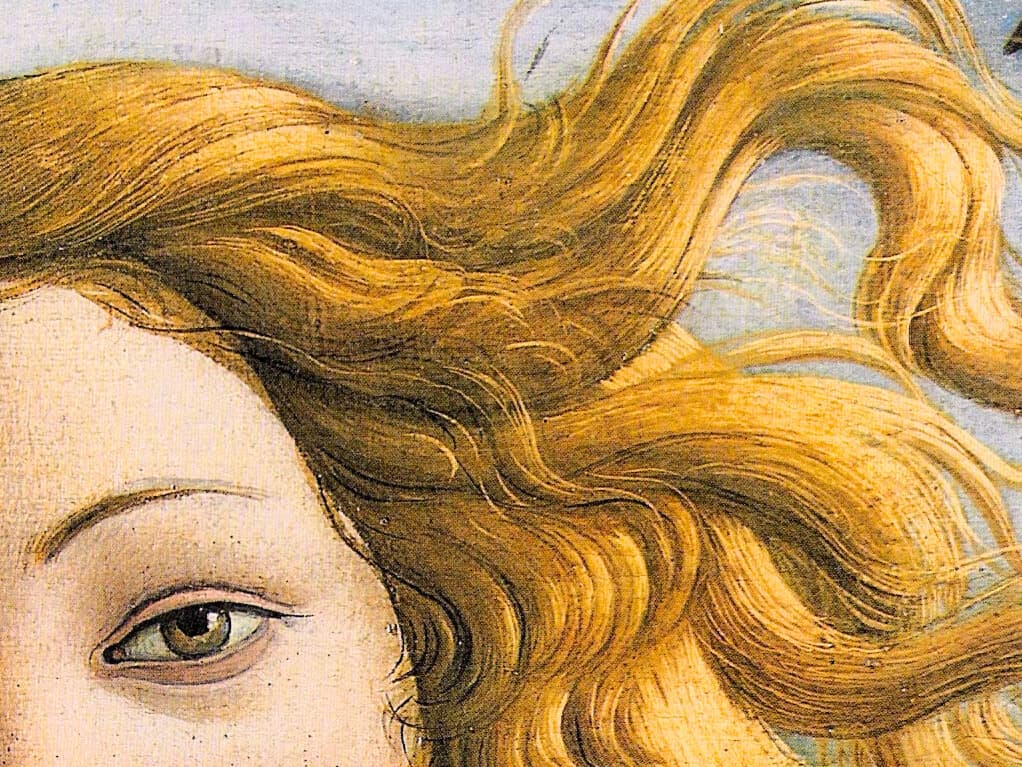
Lessons from the Homeric Hymn to the Goddess of Love

To most of us today ‘Homer’ means the Iliad and the Odyssey, two massive epic poems, over 27,000 hexameter lines between them. The ancient Greeks themselves could not quite agree exactly who this Homer was, or when or where he lived and composed. But they – or some of them – so respected him that they were prepared to credit him also with a further 33, much shorter poems.
Altogether these are known collectively as the Homeric Hymns. Each was addressed and dedicated to a god or goddess (in one case to two divine recipients – twin brothers), and some of the addressees received more than one poem. They are not Homer’s hymns: modern scholars are quite sure that the poet or poets of the Iliad and the Odyssey was not also the poet of, say, the fifth Homeric Hymn, one of the two dedicated to Aphrodite.
This is Valentine’s Day, and we all know that it’s love that makes the world go round. But the ancient Greeks were more specific. They had five or six words for different kinds of ‘love’. The sort that Aphrodite dealt in was erotic, sexual. ‘The things of Aphrodite’ was one of their ways of saying ‘sexual intercourse’. Without ancient Greek erōs, without Aphrodite, no human race…
It’s probably well known that Aphrodite (Roman equivalent Venus) was the ancient Greek goddess of Love. What may not be so familiar is that she was the only female member of the Olympian pantheon – apart from Great Father Zeus’s sister-wife Hera – who was married. Unless of course they have read what is now called the 8th book of the Odyssey, which is where court bard Demodocus regales his audience (including an unrecognised Odysseus) on the magic island of Phaeacia with a saucy tale of a divine extramarital tryst.
Rather anomalously, it might be thought, Aphrodite’s husband was the supreme craftsman god Hephaestus (Roman Vulcan), who was by no means an exemplar of Greek ideals of physical beauty. He was crippled in body (his legs) and deformed further by hours spent slaving over hot furnaces. No wonder therefore (so Demodocus could presume his audience would guess or know) that Aphrodite should have chosen to have passionate sex in the marital dwelling with the butchest of all the Olympian males, war-god Ares (Mars). Trouble was, the wink had been tipped by sun god Helios to Hephaestus, who had time and skill enough to fashion a cunning net in which to catch the adulterous couple at it. Cue gales of unquenchable immortal laughter at their humiliated expense.
Was that the extent of Aphrodite’s extramarital dalliance? It was not, not by a long chalk. But for the purposes of this jeu d’esprit of mine, I have selected just one other instance, partly because it gave rise to a fascinating legacy both literary and historical, but mainly because as told in the Homeric Hymn to Aphrodite it seems to strike a new note. This is how the Hymn starts (in my own translation):
Muse, tell me of the works of Aphrodite, rich in gold
Goddess of Cyprus who arouses sweet desire in the gods
And subdues the races of human beings
And the birds that fly through the air and all wild beasts
And the many creatures that the dry land and the open sea nourish.
To all these the works of the fair-garlanded Cytherean matter.
‘Cytherean’ is a nod to one of Aphrodite’s two principal shrines, the one in deepest Peloponnese. The other – also called out above – was at Paphos on Cyprus. The poet then says more about Aphrodite’s varied skills and attributes comparing them – favourably – to those of other gods and goddesses. Some thirty-five lines later comes the love story:
But Zeus cast a sweet longing in [Aphrodite’s] heart
To unite in sexual love with a mortal man.
That mortal was not a Greek but a man of Troy, by name Anchises – a nobly born Trojan, of course, but also and more to the point drop-dead gorgeous. For Aphrodite it was love at first sight, eagerly reciprocated. Eros seized hold of Anchises, and he boldly addressed her face-on, to which she replied deceptively that she too was a mortal woman, not a goddess as he supposed. After a considerable poetic build-up, Anchises undresses Aphrodite...
And then by the will of the gods and immortal destiny
He lay with the goddess, he a mortal, ignorant of the truth.
The rest is history – Roman history, for the son of their union, Aeneas, was destined to become the founding father of the Roman people, and as such the eponym of Virgil’s Homer-lite epic poem the Aeneid. The Homeric Hymn is not the only early Greek poetic text in which the love of Aphrodite for Anchises is told. Clearly, the story in itself fascinated. But where – arguably – the Homeric Hymn’s creator goes both further and in an original direction is by injecting it with a degree of romance – not just sheer overwhelming sexual lust, but the sense that Aphrodite and Anchises – as we say – fell in love with each other. Nor does the erotic significance of the poem end there.
Another love story between a goddess and a mortal man is told in the Hymn: between Eos, goddess of the Dawn, and a beautiful youth named Tithonus (another Trojan as it happens). But unlike the Aphrodite-Anchises match up, this one is above all a cautionary tale – exemplifying our adage ‘beware what you wish for’. Supplicating great father Zeus, Eos begged him to confer on Tithonus immortality, so that they might live together for – literally – ever and ever without end. Alas...Eos forgot to ask also for a rather crucial add-on: that Tithonus might remain forever as desirable, as handsome, as youthful as he now was. End result: he aged, he withered, he staled, he shrivelled until – according to one rather lovely version of the myth – he morphed into a tettix, a cicada, his voice a mere rasping squeak, his body – well, virtually nonexistent.
In short, a Valentine’s day lesson: mortality is just what it says, deathly; beauty fades. Carpe diem, therefore, make the most of what you have. Love may conquer all – but be careful it doesn’t conquer you to the point of shortsighted improvidence.
This spring term, join us on Tuesdays at 7:00pm ET for an online Ancient Greek course on the Homeric Hymn to Aphrodite, suitable for students reading at the intermediate level and above. Enroll by February 15th!
Originally published in In Medias Res on Substack. Read it there or subscribe to get new articles by email.